

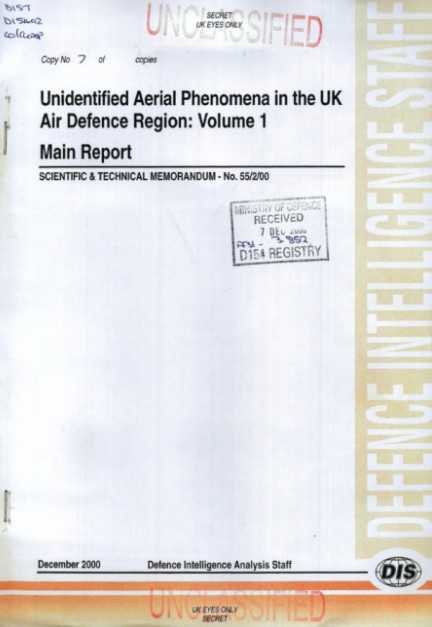
Between 1997 and 2000, the UK’s Defence Intelligence Staff conducted a study on UAPs that was later released with minimal fanfare. Titled Unidentified Aerial Phenomena in the UK Air Defence Region, the 400-page report—commonly known as Project Condign—contains conclusions that, if taken seriously, would shift the conversation on UAPs into the domain of plasma physics, cognitive modulation, and electromagnetic weaponization.
This article revisits the report not as a historical curiosity—but as a signal missed in the noise, and perhaps a partial map to the kind of non-kinetic phenomena we’re seeing increasingly in modern telemetry.
What the Report Actually Says
Project Condign’s conclusion is not subtle:
“The existence of Unidentified Aerial Phenomena (UAP), as reported in this study, is indisputable.”
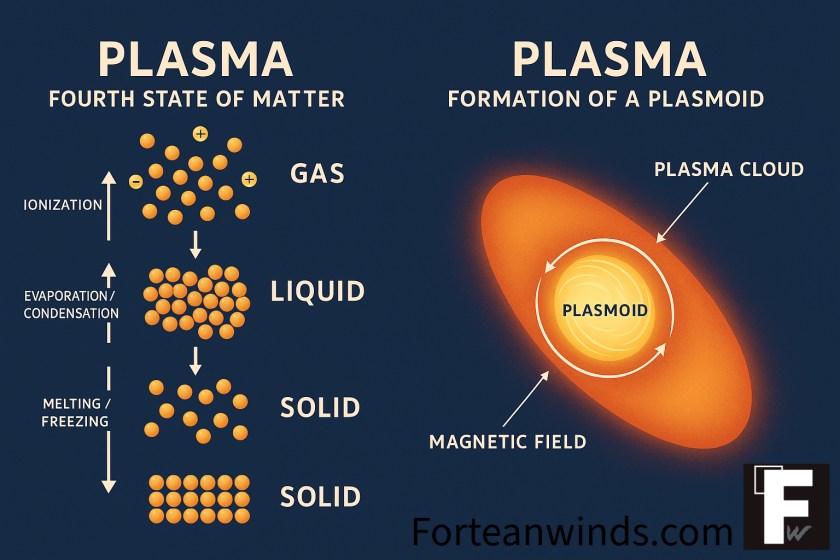
That sentence alone should’ve warranted front-page headlines in 2006. It didn’t. Why? Because the framing that followed attempted to domesticate the extraordinary: UAPs, it said, are likely buoyant plasma formations—charged atmospheric phenomena capable of producing radar returns and visual anomalies, but not under intelligent control.
Yet the report simultaneously includes these claims:
- Some UAPs are observable to radar and optical systems.
- These phenomena can induce “localised enhancements of refractive index,” affecting visibility and perception.
- Close encounters may influence the human brain via EM interactions, potentially explaining abduction narratives or visionary states.
In short: the UK government quietly admitted UAPs are real, possibly physical, possibly able to interfere with brain function, and potentially exploitable for defense applications.
Pattern Recognition: Reframing the Plasma Hypothesis
Here’s the pivot: the “plasma” explanation is not debunking—it’s a partial modeling. The data patterns it seeks to explain (sustained light forms, radar-visible structures, EM interference) are very similar to the cases observed today in more sophisticated sensor environments.
- FLIR signatures from the USS Princeton/Tic Tac case
- Hessdalen light emissions with coherent spectral peaks
- Transient EM field anomalies reported during CE2/CE3 events
All may fall within the same domain of coherent non-equilibrium plasma structures—which, under certain interpretations, might host or transmit information (whether intelligent or not remains an open question).
A Tactful Suppression
Condign was never peer-reviewed. The MoD distanced itself from it almost immediately, labeling it “internal.” The media barely engaged. But one line from the report suggests deeper institutional unease:
“The relevance of plasma and electromagnetic fields to weapon development… should not be overlooked.”
This isn’t just about UFOs. It’s about the physics of control systems, biological effects, and exotic propagation mediums. What if Condign wasn’t designed to reveal the truth—but to contain it inside a box of plausible deniability?
Appendix:
What Is a Non-Kinetic Phenomenon?
In military and scientific terms, non-kinetic phenomena refer to events or effects that don’t involve physical impact or conventional motion-based interaction. Instead of bullets, missiles, or physical collisions (i.e., kinetic energy), non-kinetic effects operate through fields, waves, and information—like electromagnetic pulses (EMP), directed energy, plasma formations, or neural modulation.
They change systems or perceptions without touching them physically.
Why This Concept Fits UAPs
Many well-documented UAP cases show characteristics far more consistent with non-kinetic effects than with traditional vehicles or weapons. Here’s how:
1. EM Interference Without Impact
- Example: 1980 Rendlesham Forest incident – military witnesses reported vehicle malfunctions and radio issues in the presence of a glowing object.
- Interpretation: A localized, possibly directed EM field affecting electronics—no visible “weapon,” no physical contact.
2. Perception Modulation
- Example: Project Condign theorized that plasma-based UAPs might affect neurological function via EM interaction.
- Modern Support: Witnesses in CE2/CE3 events often describe missing time, paralysis, or shared hallucination-like episodes. These could stem from EM-induced cognitive interference.
3. Lack of Sonic Boom or Heat Signature
- Example: Tic Tac UAP (2004) moved at supersonic speeds but produced no sonic boom, no heat plume, and no visible means of propulsion.
- Interpretation: The object’s movement may not be kinetic at all—what’s observed could be projected position, field-based translation, or light propagation anomaly.
4. Sensor-Specific Visibility
- Example: Multiple Navy UAP incidents showed objects only appearing on radar, infrared, or FLIR, but not visible to the naked eye.
- Implication: These are selectively interacting with the environment, possibly manipulating which wavelengths or sensors detect them.
5. Environmental Anomalies Without Mass
- Example: Hessdalen Lights and Skinwalker Ranch phenomena show measurable EM changes, radiation bursts, or infrared light with no corresponding solid object.
- Interpretation: These may be coherent energy formations—plasma, or something more exotic—interfacing with the environment without mass or momentum.
- Seismic Activity: A link has been noted by Dr. Michael Persinger, and a new crop of researchers such as Miguel A. Galán are contributing to a growing body of research on UAP and electroballs.
Conclusion: Not “Craft”—Field Events
The consistent absence of:
- Sonic booms
- Heat trails
- Inertial motion
- Physical propulsion
…suggests that at least some UAPs are better described as non-kinetic events—field-based, energy-based, or intentional manipulations of space, perception, and systems.
This is why Project Condign’s conclusions, though framed as “natural plasma,” might actually be pointing toward engineered, intelligent, non-kinetic phenomena—interacting with us and our instruments in ways we barely understand.


4 responses to “Condign Revisited: A Quiet Disclosure, Lost in the Noise”
There is a peer reviewed scientific article about plasma balls that try to explain UAP and many other paranormal phenomena sharing many ideas with the Project Condign report in this link: https://www.researchgate.net/publication/387476125_Exploring_the_Link_Between_Paranormal_Phenomena_and_Plasma_Balls
There is a website about it too: https://electroballpage.wordpress.com
LikeLiked by 1 person
Awesome. Much appreciated.
LikeLike
[…] by thousands of independent witnesses. The documentation is real. The suppression is also real: Project Condign, the Robertson Panel, the Condon Committee, the classification of UAP sensor data as top secret. […]
LikeLike
[…] documents 1,652 UAP cases, 171 classified as unexplained with anomalous flight characteristics. The UK Condign Report (2006) confirms electromagnetic and sub-acute physiological effects in a subset of documented encounters. […]
LikeLike