
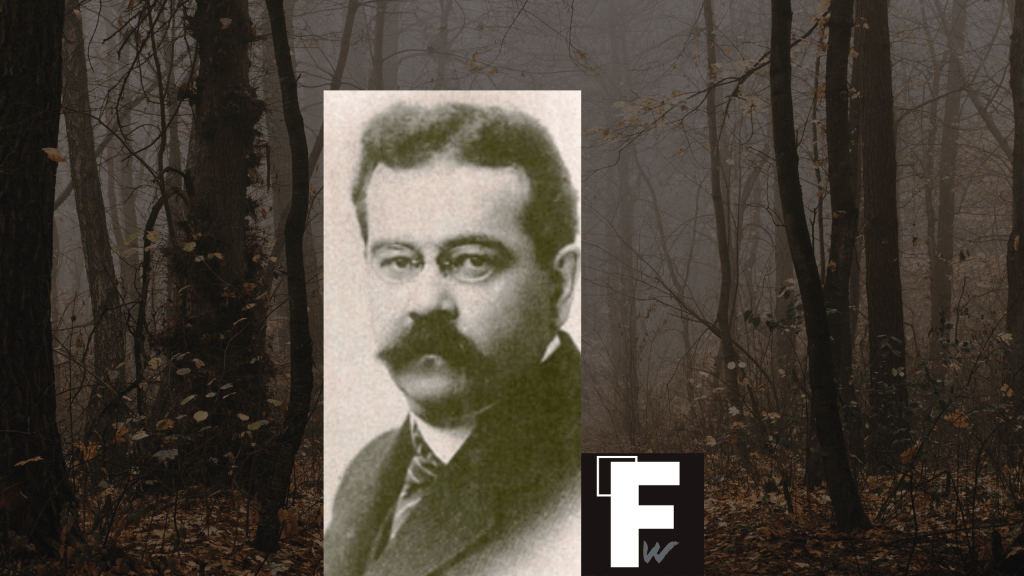
There are varying definitions, but a Fortean follows the anomalous researcher and writer tradition of Charles Fort. Charles Fort (1874–1932) wrote numerous articles and books involving unexplained scientific and paranormal events.
He is regarded by many as the godfather of UFOlogy, the discoverer of ball lightning, and the inventor of the term “teleportation.” Could any anomalous researcher match this curriculum vitae? We think not, but we endeavor to persevere.
What Is a Fortean?
From the Fortean Winds point of view: to become a Fortean, you need only curiosity and an open mind. Fort rejected scientific dogma — but this doesn’t mean he rejected science. He didn’t allow theory to overcome data. He would not allow the scientific establishment to dismiss a world filled with anomalies and the unexplained. He often used humor to make his point, which has occasionally backfired. More on that below.
UAPs or UAP are the perfect example of the Fortean approach in action. Fort followed the subject closely and was an early proponent of the extraterrestrial hypothesis. In 2019, the US government admitted (again) that UAPs were real. NASA administrator Bill Nelson has stated he considers the extraterrestrial hypothesis plausible. Fort was right to keep the file open.
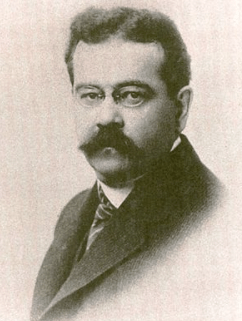
Charles Fort: The Man Behind the Tradition
Fort spent decades in libraries collecting newspaper accounts of anomalous events that science had dismissed or ignored. Falls of fish from clear skies. Teleportations. Balls of fire. Unidentified aerial phenomena reported centuries before anyone called them UFOs. He compiled these into four books: The Book of the Damned, New Lands, Lo!, and Wild Talents.
Some of his hypotheses were tongue-in-cheek. He knew they were ridiculous and put them forward as a way of provoking science into engaging with its own contradictions. This has value. But today people sometimes confuse his humor with fact, and in the study of the unexplained that distortion has caused real damage. Fort himself turned away from the first Fortean Society formed in his name. You don’t need anyone’s blessing to be a Fortean. You don’t need to join anything.
I believe nothing. I have shut myself away from the rocks and wisdoms of ages, and from the so-called great teachers of all time, and perhaps because of that isolation I am given to bizarre hospitalities. I shut the front door upon Christ and Einstein, and at the back door hold out a welcoming hand to little frogs and periwinkles. I believe nothing of my own that I have ever written. I cannot accept that the products of minds are subject-matter for beliefs. But I accept, with reservations that give me freedom to ridicule the statement at any other time, that showers of an edible substance that has not been traced to an origin upon this earth, have fallen from the sky, in Asia Minor.
Charles Fort, Lo! — 1931
John Keel: The Second-Most Famous Fortean
To illustrate what Fortean research looks like in practice, consider John A. Keel. He wrote The Mothman Prophecies and a number of other books on anomalous subjects. While Fort did most of his research in the library, Keel was prone to adventure.
He visited Point Pleasant, West Virginia in the 1960s and became part of the infamous UAP and cryptid flap during that era. He visited Egypt to look for ancient anomalies and saw a UFO himself. Like Fort, Keel was a loner. Many of his investigations were done alone, and he chose not to join any particular group.

Due to his field experiences in Point Pleasant, Keel moved away from the extraterrestrial hypothesis entirely, writing: “I abandoned the extraterrestrial hypothesis in 1967, when my own field investigations disclosed an astonishing overlap between psychic phenomena and UFOs. The objects and apparitions do not necessarily originate on another planet and may not even exist as permanent constructions of matter. It is more likely that we see what we want to see and interpret such visions according to our contemporary beliefs.”
Keel’s work bears a striking similarity to current research and theories surrounding Skinwalker Ranch — which has produced exactly the kind of overlap between UAP, cryptids, and consciousness effects that Keel was describing in the 1960s.
The Ultraterrestrial: Keel’s Most Important Idea
Keel coined the term “ultraterrestrial” in his book The Eighth Tower. It was meant to give readers his evolved view of the phenomenon: not extraterrestrials from science fiction, but interdimensional beings or entities more analogous to what religious traditions call demons or spirits. Something that has always been here, not something visiting from elsewhere.
He later felt the term was a failure — people began naming the ultraterrestrials, assigning them personalities, and building belief systems around what he had intended as a working concept. Which brings us to Fort’s and Keel’s shared first rule: Never form a belief. Theorize, hypothesize, guess, speculate — but never form a belief. The moment you do, you’ve stopped researching and started confirming.
The reason Fort and Keel are still read today is that they found real anomalies and were honest about not knowing what they found. That’s the standard.
What “Fortean Winds” Actually Means
The term “Fortean winds” refers specifically to a pattern Fort observed: strange events occurring in clusters or waves, often coinciding with unusual weather patterns or atmospheric changes. A sudden increase in UAP sightings during a period of stormy weather. A flap of cryptid encounters in a particular region over a specific season. The phenomenon doesn’t distribute randomly. It comes in bursts.
This has become a popular expression among anomalous researchers to describe unexplained phenomena that occur in inexplicable patterns — and it’s the core of what we study here. Not single events, but the shape of the pattern across events.
The Fortean Winds Approach
Fortean Winds is a collective of private and anonymous researchers. We have no organization and rarely agree on everything. This is healthy. The only thing we share is a data-driven approach to the phenomenon and an insistence on separating what we know from what we think.
We don’t typically include single-witness accounts in our research because they’re too hard to validate. But that doesn’t mean we don’t believe people. We can’t imagine how alone it must make someone feel to witness the unknown and be called mad. We read firsthand accounts whenever we can. Groups like The Singular Fortean Society are publishing detailed anomalous reports regularly, and as we look for patterns in the data, we always need more data.
So, what is a Fortean? Someone who researches the anomalous and unexplained. They’re doing it in groups and doing it alone. They’re doing it for no money, because there’s no money in it. Sure, there are people out there selling all the answers — but if you have all the answers, you’re not researching the unexplained anymore. We have data and we have theory. We’re trying to understand it better. That’s it.
Congratulations. You just became a Fortean.
 Fortean Winds: Anolmalous Research
2 responses to “What Is a Fortean? Charles Fort, John Keel, and the Method Behind the Mystery”
[…] to begin? Charles Fort said “One measures a circle, beginning anywhere.” He faced this exact question in the early […]
LikeLike
[…] It seems to have come into fashion to pretend as if the study of UAP is just beginning. Perhaps it’s all of us who are new to the study assuming the party didn’t start until we arrived. Yet, modern UFOology has been happening for well over a hundred years. […]
LikeLike