
At Fortean Winds, we explore the intersections of power, influence, and the unknown. One of the most provocative questions we face is whether entities controlling religion might also exert influence over the global economy. This inquiry raises profound questions about power dynamics and historical context, suggesting that those in control might be seeking to suppress information to maintain their advantage.
The connections between economic power, intelligence agencies, and possibly even UAP (Unidentified Aerial Phenomena) form a complex and multifaceted web. To unravel this, we must trace the historical roots and ongoing influence of key families and institutions that have shaped global power structures.
Historical Context and the CIA’s Formation
The Central Intelligence Agency (CIA) was established in 1947, shortly after World War II, and has its roots in the Office of Strategic Services (OSS), the wartime intelligence agency of the United States. The CIA’s creation was influenced by various factors, including the need to centralize intelligence efforts during the Cold War. Notably, some founders of the CIA were connected to elite social circles, “old money,” and various powerful networks.
- Old Money and Elite Influence: Many early CIA operatives came from Ivy League backgrounds and were part of the American upper class. This connection intertwined economic power with intelligence activities, ensuring that those in power could protect and expand their influence.
- Mafia and Organized Crime: During the early Cold War years, the CIA reportedly collaborated with organized crime groups for certain covert operations. Efforts like Operation Underworld during World War II, where the OSS worked with the Mafia to protect American docks from Axis sabotage, exemplify this cooperation.
Control of the Economy
The control of the global economy is often linked to powerful financial institutions, multinational corporations, and influential economic policymakers. These entities, sometimes connected to intelligence agencies, can exert significant influence over economic policies and decisions.
- Financial Institutions and Corporations: Major banks and corporations wield considerable power over the global economy. Their influence extends through lobbying, political donations, and revolving doors between private sector roles and government positions.
- Economic Policy and Intelligence: Intelligence agencies have historically been involved in economic intelligence, monitoring global markets, and influencing economic policies. During the Cold War, the CIA and other intelligence agencies gathered economic intelligence to understand and counter Soviet economic activities.
Connection to UAP and Broader Implications
The connection between UAP phenomena and these powerful entities raises questions about secrecy, technological advancements, and control over strategic knowledge. If intelligence agencies have indeed recovered and studied UAP technology, as suggested by figures like David Grusch, the implications for both national security and economic power are profound.
- Technological Advancements: The study of UAP technology could potentially lead to significant technological breakthroughs, giving those with access a considerable advantage in both economic and military domains.
- Secrecy and Control: The control over information related to UAPs and advanced technology could also be a means of maintaining strategic superiority and economic dominance.
Influential Families and Their Ongoing Role in Intelligence and Economic Control
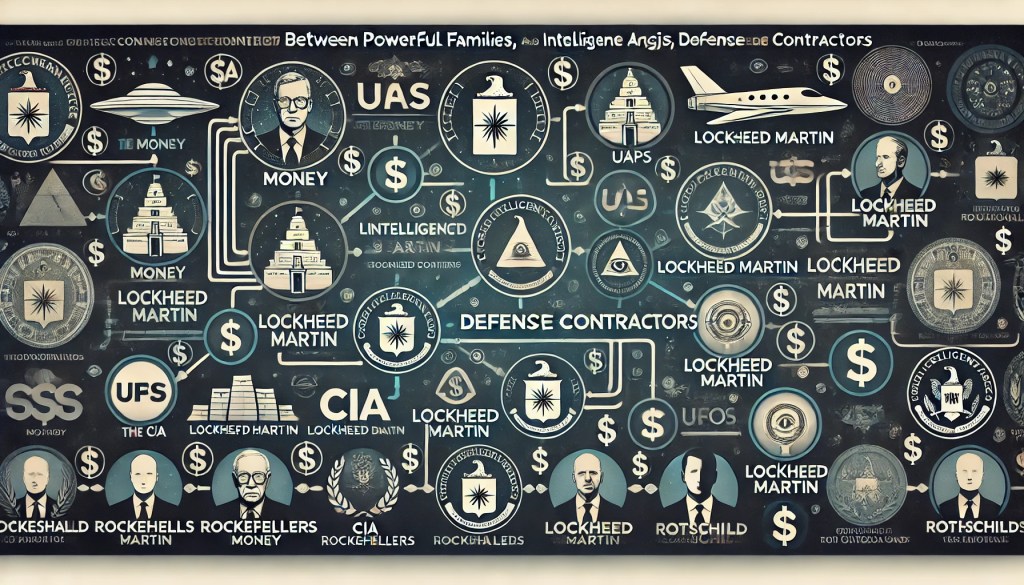
The intertwining of influential families, intelligence agencies, and economic power is a recurring theme in modern history. Several families have historically played significant roles in shaping global economic policies and intelligence operations. Their influence persists through various mechanisms, including political involvement, corporate control, and strategic alliances.
Translation: They have been involved in the funding of and installed personnel into Intelligence agencies all over the planet.
- Rockefeller Family: With vast wealth originating from Standard Oil, the Rockefellers have been deeply involved in shaping U.S. economic policies and international relations. Their influence extends into the creation of the Council on Foreign Relations (CFR), a think tank instrumental in U.S. foreign policy.
- Rothschild Family: Known for their banking empire established in the 18th century, the Rothschilds have had a significant impact on European and global economies. Their ongoing influence continues through various financial institutions and investments in diverse industries.
- Bush Family: The Bush family’s involvement in U.S. politics and intelligence is well-documented. Prescott Bush’s banking and political activities laid the groundwork for his son, George H.W. Bush, who served as CIA Director before becoming Vice President and President.
- DuPont Family: Known for their chemical manufacturing empire, the DuPonts have been influential in U.S. industry and politics. Their resources were crucial during both World Wars, providing materials for the military and intelligence operations.
- Mellon Family: Through banking and industrial enterprises, the Mellons have had a substantial impact on U.S. economic policies. Their legacy continues through involvement in banking, philanthropy, and political influence.
Interest in Controlled Secrecy
Those with access to potentially revolutionary technology—whether derived from UAPs or not—may want to keep it under tight control. The reasons could range from maintaining a strategic military advantage to protecting corporate interests or even preventing societal disruption.
- Maintaining a Strategic Advantage:
- Military and National Security: If advanced technology exists, those in possession of it could see it as a means to establish or maintain global dominance. The ability to control such technology could provide unparalleled military and intelligence advantages, making secrecy a priority.
- Black Budget Programs: Much of this research and technology could be hidden within classified programs funded by black budgets, making it nearly impossible for the public or traditional oversight mechanisms to access or understand what’s truly going on.
- Protecting Corporate and Economic Interests:
- Corporate Secrecy: Major corporations, especially in defense, aerospace, and energy, may have a vested interest in keeping these technologies under wraps. They could be developing new products or energy sources that would radically alter the market—and possibly disrupt current profit streams.
- Economic Stability: The sudden release of such advanced technology could destabilize markets and economies. For instance, if a new free energy source were revealed, it could collapse the global energy industry overnight, leading to economic chaos.
- Controlling Information and Power:
- Information as Power: Knowledge of advanced technology, especially if it includes capabilities like anti-gravity or advanced propulsion systems, is a form of power. Those who control this information can dictate its use and prevent it from falling into the hands of rivals or the public.
- Benevolent or Self-Serving Motives: There’s a debate about whether this secrecy is maintained for benevolent reasons—such as preventing misuse of the technology or societal disruption—or for self-serving purposes like maintaining control and dominance over others. The truth likely includes elements of both.
Joint Secrecy: Human and Non-Human Interests
When discussing “entities” invested in secrecy, we must consider the possibility that this includes both powerful human organizations and potentially Non-Human Intelligences (NHIs). This adds another layer of complexity to the entire discussion about UAPs and advanced technology.
- Human Interests in Secrecy:
- Government and Military Secrecy: Human institutions, particularly in government and military sectors, have a long history of keeping advanced technology under wraps. This is often justified under the guise of national security, with the idea that revealing such technology could compromise a nation’s strategic advantage.
- Corporate Interests: Corporations, especially in defense and aerospace industries, have strong incentives to keep certain technological advancements secret, delaying commercialization to control market dynamics and maintain competitive advantages.
- NHI Interests in Secrecy:
- Unclear Motivations: The motives of NHIs, assuming they exist and interact with humans, are far less understood. Some theories suggest they might maintain secrecy to avoid disrupting human society or because they have their own agenda that is not aligned with human interests.
- Potential Collaboration with Humans: Speculation exists that some human institutions might be in contact or collaboration with NHIs. This collaboration could involve agreements to keep certain knowledge or technologies hidden from the public for mutual benefit, preventing panic, protecting both human and NHI interests, or allowing for controlled dissemination of information.
- Joint Secrecy: A Strategic Alliance?:
- Coordinated Efforts: If both human entities and NHIs are involved in maintaining secrecy, it suggests a coordinated effort to control information. This collaboration might involve strict agreements on what can be disclosed and what must remain secret.
- Mutual Benefits: Both humans and NHIs might benefit from such an arrangement. Humans could gain access to advanced technology or knowledge, while NHIs might ensure their presence remains undetected or unchallenged. This secrecy might be deemed necessary to avoid disrupting the current balance of power or to protect both parties from external threats.
Conclusion: Who Controls the Secrets of UAP Phenomena?
The control over UAP-related information appears to be heavily influenced by a combination of powerful human entities and possibly Non-Human Intelligences (NHIs). This control is primarily exercised by the intelligence community, which is deeply intertwined with elite financial and corporate interests.
1. Human Entities and the Intelligence Community
- Intelligence Agencies: The CIA, NSA, and other intelligence agencies have historically been involved in the investigation and potential cover-up of UAP encounters. These agencies operate within a framework that prioritizes national security, often justifying secrecy under the guise of protecting strategic interests.
- Wealth and Influence: The intelligence community is often influenced by powerful families and corporate interests that have a vested interest in maintaining the status quo. These groups wield significant economic power and have the means to control information flow, ensuring that only select individuals have access to advanced technologies or knowledge.
2. Non-Human Intelligence (NHI) Involvement
- Speculative Collaboration: There is speculation that some human institutions might be in contact with or influenced by NHIs. This potential collaboration could involve agreements to keep certain knowledge or technologies hidden, benefiting both human elites and NHIs.
- Motivations for Secrecy: The reasons behind NHI involvement in maintaining secrecy are less understood. It could range from preventing societal disruption to pursuing their own undisclosed agendas.
3. The Joint Secrecy Between Humans and NHIs
- Coordinated Efforts: If both human and non-human entities are involved in maintaining secrecy, it suggests a sophisticated and coordinated effort to control information. This collaboration likely involves stringent agreements on what can be disclosed to the public.
- Implications for Public Knowledge: The control over advanced technology and the motivations behind it create a significant barrier to public understanding. This secrecy benefits those in power, keeping revolutionary knowledge out of the hands of the public.
Final Thoughts
Understanding the interplay between human and non-human interests in maintaining secrecy around UAPs and advanced technologies is crucial for anyone seeking to uncover the truth. The complex web of power, control, and secrecy presents significant challenges for researchers and the public alike. Only by remaining vigilant, objective, and committed to the pursuit of truth can we hope to bring this hidden knowledge into the light.
Supporting Resources:
- Jacques Vallée’s “Passport to Magonia” – Vallée’s work delves into the historical connections between folklore, religious experiences, and modern UAP encounters, suggesting a possible NHI influence.
- The Pentagon’s UFO Report and the Search for Truth – This New York Times article discusses the U.S. government’s ongoing investigations into UAPs and the challenges of public disclosure.
- The Rockefeller Influence on U.S. Foreign Policy – This article from the Council on Foreign Relations explores how the Rockefeller family has shaped U.S. foreign policy, including their influence on intelligence activities.
- The CIA and UAPs: A Historical Overview – A declassified CIA document discussing the agency’s involvement in UAP investigations.
 Fortean Winds: Scientific Research into the Unexplained, Paranormal and Anomalous
Leave a comment