Non-Human Intelligence (NHI) and the Role of Religion in the UAP Phenomenon

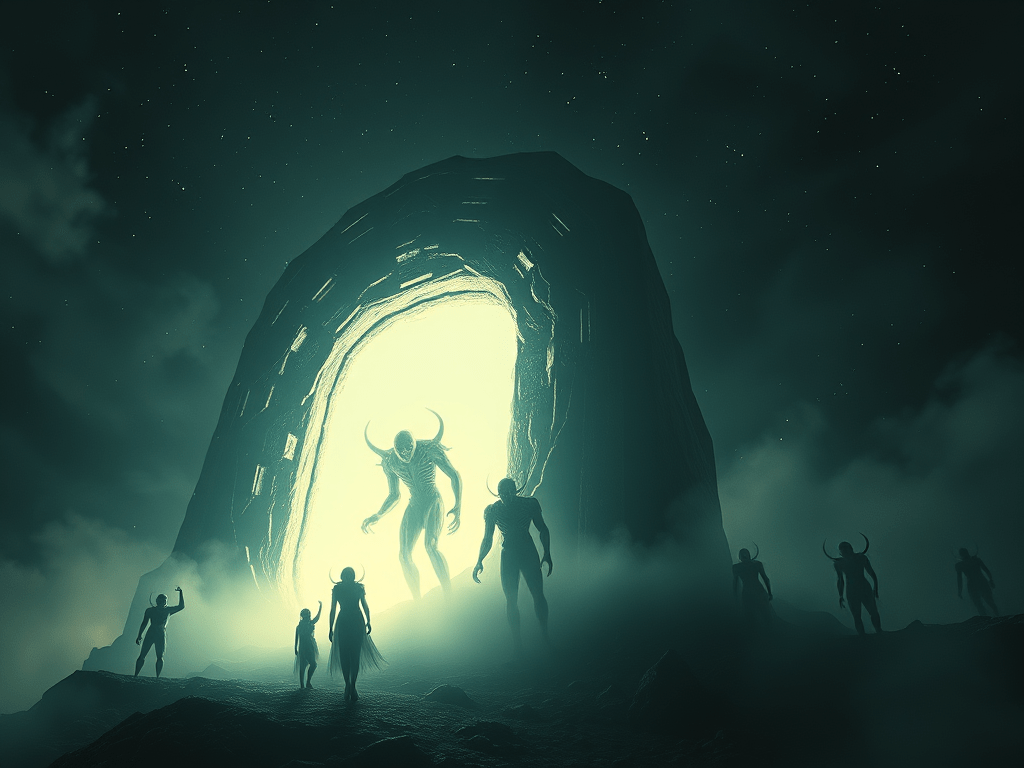
Society is increasingly recognizing the influence of Non-Human Intelligence (NHI) on the UAP phenomenon, speculating that NHIs may be using religion to shape human civilization and acquire human DNA. Researchers Jacques Vallee and John Keel suggest that NHIs may disrupt and maintain societal patterns through religious experiences. This strategy could promote family values and ensure a thriving human population, aligning with reports of NHIs’ interest in human DNA.

Through admissions of the government and copious public research, society is beginning to accept that the UAP phenomenon is being driven by NHI or Non-Human Intelligence.

Speculations abound about the motives and actions of these NHIs, particularly regarding their involvement in human societies and cultures. One intriguing hypothesis posits that NHIs may be leveraging religion as a tool to influence human civilization, potentially to support family structures and the propagation of humanity.

This article explores the idea that NHIs use religion as both a pattern disruption tool and a pattern maintenance tool, with the ultimate goal of acquiring human DNA. To deepen our understanding, we review the works of prominent researchers Jacques Vallee and John Keel.

Jacques Vallee: The Interdimensional Hypothesis

Jacques Vallee, a pioneering figure in UAP research, offers a comprehensive perspective on the phenomenon that transcends the extraterrestrial hypothesis. Vallee suggests that UAPs might not originate from distant planets but rather from parallel dimensions or realities. His work emphasizes the complex and often surreal nature of UAP encounters, which frequently include elements that seem tailored to the cultural and psychological contexts of the witnesses.

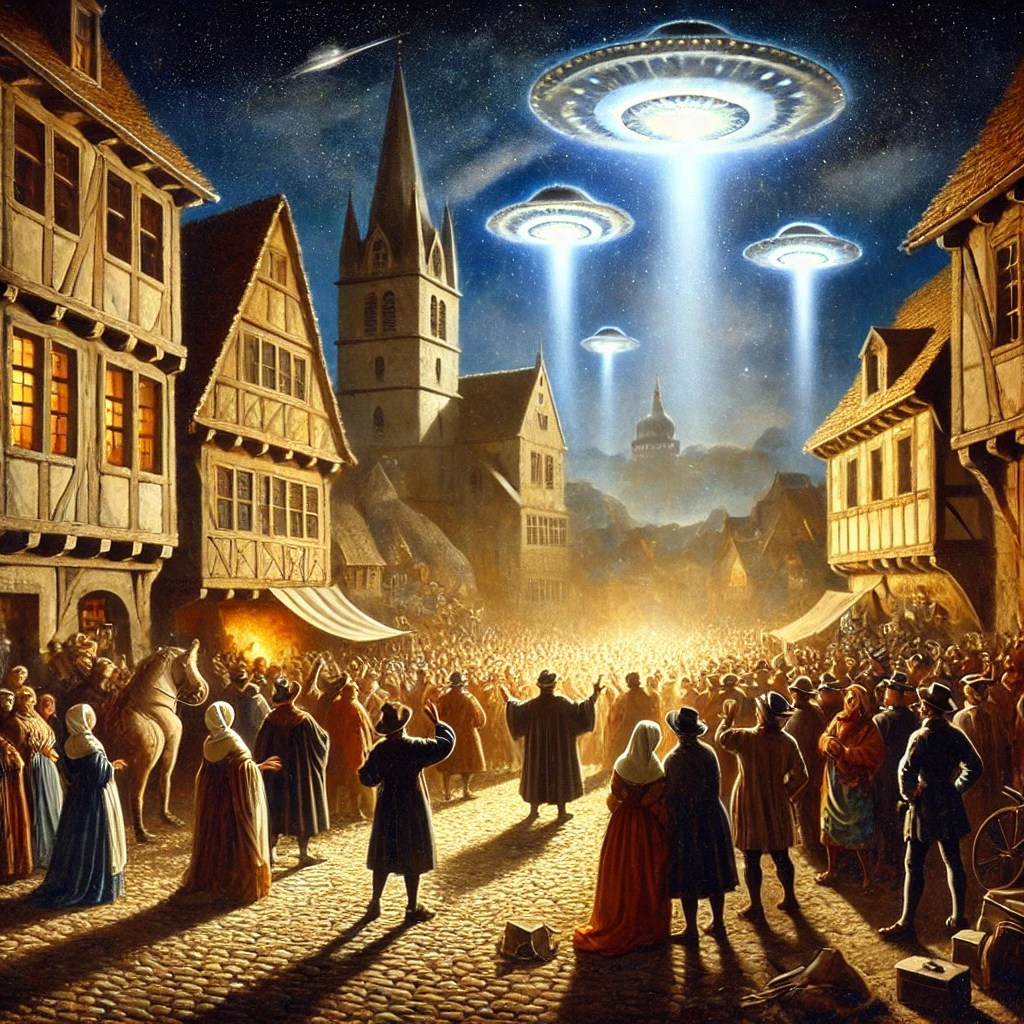
Vallee’s exploration into the historical and cultural impact of UAP encounters reveals a recurring theme: many of these events bear striking similarities to religious experiences. Apparitions, miraculous healings, and prophetic messages are common in both UAP encounters and religious narratives.

Vallee’s research supports the idea that NHIs might be using religion to influence human societies. By manifesting in ways that align with existing religious beliefs, NHIs can disrupt an individual’s current worldview and realign it with new, more beneficial patterns.

John Keel: The Ultraterrestrial Hypothesis

John Keel, another seminal figure in UAP research, introduced the concept of “ultraterrestrials”—beings that exist in a reality parallel to our own and that have been interacting with humanity for centuries. Keel’s investigations into UAP phenomena, particularly in his book “The Mothman Prophecies,” highlight the often disturbing and disruptive nature of these encounters.

Keel noted that many UAP sightings and paranormal experiences share characteristics with traditional folklore and religious accounts of encounters with supernatural beings.

Keel’s work suggests that these ultraterrestrials use their abilities to manipulate human perceptions and beliefs, often through disruptive means. By creating extraordinary experiences that challenge existing worldviews, these beings can redirect individuals’ beliefs and behaviors, often towards new religious or spiritual understandings.

This aligns with the idea that NHIs might use disruptive encounters to break down old patterns and establish new ones, which are then maintained through ongoing religious or spiritual practices.

a scientist examining a screen of UAP information

NHIs and Religion: A Strategy of Disruption and Maintenance

The notion that NHIs might engage with human religion is not without precedent. Throughout history, many cultures have reported encounters with otherworldly beings that have shaped their religious and spiritual beliefs. These encounters often serve as a foundation for societal norms and values, suggesting both a disruptive and civilizing influence.

NHIs could use religion in a two-fold strategy:

  1. Pattern Disruption: By introducing disruptive religious experiences, such as visions, miracles, or encounters with divine beings (e.g., angels), NHIs can shake individuals out of their existing patterns. These disruptions can lead to profound personal transformations, realigning individuals with new religious or spiritual paradigms. Such experiences often result in a heightened sense of purpose and community belonging, making individuals more susceptible to the maintenance phase.
  2. Pattern Maintenance: Once individuals have been realigned or converted through a disruptive experience, religion then serves to maintain these new patterns of thought and behavior. Religious teachings, rituals, and community structures reinforce the new beliefs and values, ensuring stability and continuity within the society. This maintenance phase promotes social cohesion and familial structures, which are essential for a thriving and sustainable population.

The Quest for DNA: Why Population Matters

The focus on family and propagation leads to another intriguing aspect of this hypothesis: NHIs’ interest in human DNA. Numerous reports and testimonies from UAP encounters suggest that these intelligences are keenly interested in genetic material. This raises the question of why they would need human DNA and how religion might play a role in this pursuit.

By promoting religious values that encourage large families and societal stability, NHIs could be ensuring a steady and growing human population. A larger population means a more extensive and diverse genetic pool, which could be of significant interest to NHIs for reasons we can only speculate about. Whether for scientific research, hybridization programs, or other unknown purposes, a thriving human population provides a rich source of genetic material.

Religion as Both a Disruption and Maintenance Tool

Religion has long been seen as both a pattern disruption and a pattern maintenance tool, depending on the context:

  • Pattern Disruption: Through transformative religious experiences or encounters, NHIs can disrupt existing societal norms and individual beliefs. This disruption is often necessary to break down old patterns and pave the way for new, more beneficial ones.
  • Pattern Maintenance: Once the disruptive phase achieves its goal, religion helps to maintain the new patterns through consistent teachings, rituals, and community practices. This ensures long-term stability and cohesion within the society, aligning with the goals of NHIs to promote a thriving human population.

Conclusion

The idea that Non-Human Intelligences might use religion as a means to shape human civilization is both provocative and compelling. By employing a strategy of disruption and maintenance, NHIs can foster stability, family values, and societal cohesion. This, in turn, provides them with a rich source of genetic material, aligning with reports of their interest in human DNA.

The works of Jacques Vallee and John Keel offer valuable insights into how NHIs might be using religious experiences and modern spirituality to influence human societies. As we continue to explore the mysteries of UAPs and NHIs, it is crucial to consider these broader implications.

Understanding the potential motives and methods of these intelligences not only sheds light on their interactions with humanity but also offers insights into the profound and far-reaching impact of religion as both a disruptive and civilizing force in our world.

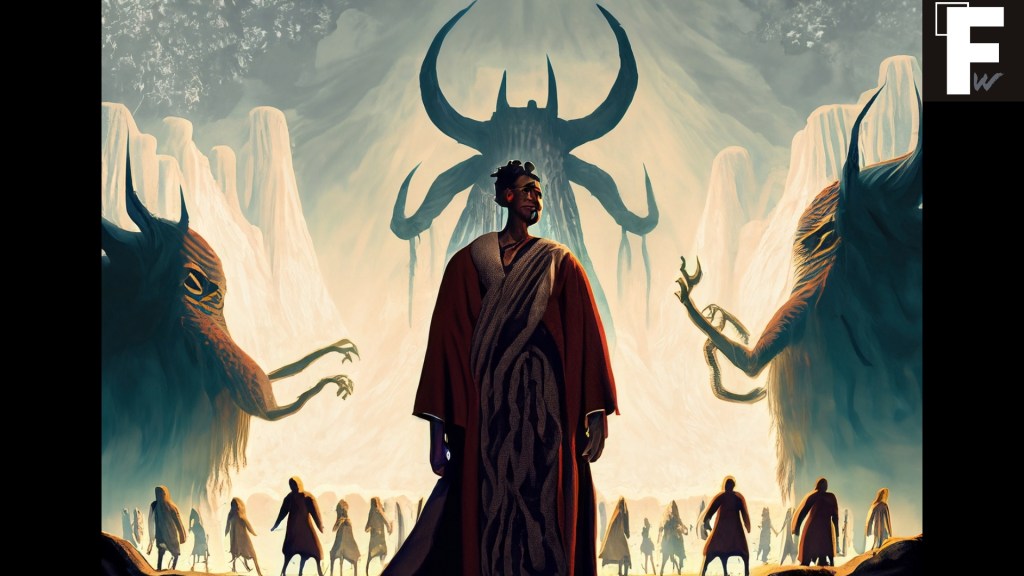
A man being confronted by an ethereal apparition.

The Watchers’ Legacy: Angels, Demons, and UFO Connections

The Book of Enoch, excluded from the King James Bible, features the significant narrative of the Watchers—angels who rebelled and fathered the Nephilim. This story reshaped perceptions of angels and demons, influencing theology, eschatology, and even modern UFO folklore, where ancient accounts prompt speculation on extraterrestrial connections.

The Book of Enoch didn’t make the cut into the modern King James version of the Bible.  Yet, it is among the oldest Abrahamic religious texts known to exist.  It was found among the Dead Sea Scrolls in a cave in 1947.  One often stated reason for its exclusion from the Christian Bible is that it’s an exegesis(an explanation of an existing text) of a story found in Genesis. A story which briefly mentions events unfolding before the flood.

The Nephilim were on the earth in those days—and also afterward—when the sons of God went in to the daughters of humans, who bore children to them. These were the heroes that were of old, warriors of renown

Genesis 6:4

Yet, within the pages of the Book of Enoch a narrative of immense significance unfolds—the tale of the Watchers.

This account, found within the pages of the “Book of the Watchers,” stands as a cornerstone of the text and has reverberated through the corridors of religious thought for centuries. It is a narrative that has captured the imagination of scholars, theologians, and curious minds alike, leaving an indelible mark on the way we perceive celestial beings.

Shaping Perceptions of Angels and Demons

The story of the Watchers transcends the boundaries of a simple narrative. It has played a pivotal role in shaping our perceptions of angels and demons within the Judeo-Christian tradition.

Prior to this narrative, angels were often viewed as divine messengers and servants of God, embodying purity and obedience. However, the Watchers’ rebellion challenged this conventional understanding, introducing a complex dimension to celestial beings. They were no longer confined to a singular role but could also be agents of rebellion and corruption when swayed by earthly desires.

A Connection to UFO Folklore

Beyond its impact on religious thought, the story of the Watchers has found its place in the intriguing realm of UFO folklore. Researchers and enthusiasts have contemplated whether this ancient narrative holds clues to unexplained phenomena.

Some have wondered whether the tale of the Watchers might not be a mere allegory, but a reflection of a human and non-human hybridization program gone awry. This speculation leads to fascinating questions about the possibility of non-human involvement in human history and the idea of a program that was reset by those overseeing it.

An Ongoing Source of Inquiry

The narrative of the Watchers, with its layers of theological significance and its connection to contemporary discussions of UFOs and hybridization, remains a source of ongoing inquiry.

It exemplifies the enduring power of ancient texts to spark curiosity and exploration across diverse domains of knowledge. As we navigate the complex interplay of religious narratives, folklore, and modern interpretations, the story of the Watchers continues to challenge our perceptions and provoke thought-provoking discussions about the mysteries of the universe and our place within it.

The Watchers’ Descent:

The narrative unfolds with the descent of a group of celestial beings known as the Watchers. These angels, seduced by earthly desires, transgress divine boundaries by taking human women as their partners.

This forbidden union results in the birth of the Nephilim, a race of giants. The consequences of this celestial dalliance ripple through the narrative, setting the stage for profound theological exploration.

Influence on Angelology:

The story of the Watchers fundamentally reshaped the way angels were perceived in Judeo-Christian traditions. Prior to this narrative, angels were often seen as messengers of God, serving obediently in the heavenly realm. However, the Watchers’ rebellion portrayed angels in a different light—they could be agents of rebellion and corruption when led astray by their own desires.

This shift in perspective prompted deeper theological reflections on the nature of angels. It led to the development of angelology, a branch of theology dedicated to the study of angels.

Scholars and theologians grappled with questions about the free will of angels, their capacity for sin, and their role in the human experience. The story of the Watchers served as a foundational text for these discussions.

Emergence of Demonology:

Equally significant is the narrative’s influence on the development of demonology. The Watchers, once holy beings, become fallen angels as they succumb to their earthly desires.

This transformation raises questions about the nature of evil and the existence of malevolent entities. As the fallen angels father the Nephilim, they contribute to the corruption and wickedness in the world, further solidifying their association with malevolence.

The concept of fallen angels, driven by their own desires to rebel against the divine order, laid the groundwork for the emergence of demonology. Scholars began to explore the origins and characteristics of these fallen entities, paving the way for a deeper understanding of evil forces in the world.

Impact on Eschatology:

The narrative of the Watchers also left its imprint on eschatological thought—the study of end times and the final destiny of humanity. The Book of Enoch, with its vivid descriptions of the Watchers’ transgressions and divine judgment, contributed to the shaping of eschatological beliefs.

The fate of the Watchers, who are bound and cast into darkness as punishment for their actions, offered a glimpse into the consequences of cosmic disobedience. This imagery played a role in the development of apocalyptic thought, influencing discussions about the end of the world, divine judgment, and the ultimate resolution of good versus evil.

Impact on UFO Lore:

In relation to UAP lore, there are a few points of connection:

  1. Ancient Astronaut Theory: Some proponents of UAP lore and ancient astronaut theories suggest that the Nephilim were, in fact, extraterrestrial beings. They interpret the “sons of God” as aliens who visited Earth and had offspring with human women. This theory is part of a larger set of beliefs that suggest extraterrestrial beings have been involved in human history.
  2. Technological Anomalies: In some interpretations, the abilities or technologies attributed to the Nephilim in ancient texts are seen as evidence of advanced technology, possibly extraterrestrial or non-human in origin. This is analogous to how some modern UAP sightings involve reports of advanced technology.
  3. Cultural and Mythological Patterns: A broader connection is the way in which both Nephilim legends and UAP sightings reflect human culture’s deep interest in and speculation about beings from the sky or from other worlds. Both sets of lore deal with the idea of contact with non-human intelligences.
  4. Government and Religious Documents: Some UAP researchers look into historical religious and government documents for evidence of UAPs or extraterrestrial life, sometimes drawing parallels with stories like that of the Nephilim.

In summary, the story of the Watchers in the Book of Enoch serves as a pivotal narrative that profoundly influenced the development of thought surrounding angels, demons, and eschatology within Judeo-Christian traditions. It challenged conventional views of celestial beings, paving the way for in-depth theological explorations that continue to shape religious discourse to this day.

The Puzzling Phenomenon of Possession: Bridging Science and the Supernatural

The condition of possession is acknowledged by psychiatry and rare cases of supernatural possession can be remedied by spiritual healing.

The enigmatic phenomenon of possession has long been a subject of fascination, fear, and skepticism. In recent years, however, it has gained recognition in unexpected quarters, including the field of psychiatry. Experts from the fields of science, psychiatry and psychology have acknowledged the condition of possession.

Below is a collection of resources which demonstrated to us that the possession phenomenon continues into the modern era, and rare cases of what appears to be supernatural or paranormal cases of possession exist.

These resources are meant to accompany the discussion we had in our podcast episode you can find below. In the episode, we interview a person who witnessed a supernatural possession and go into more detail on our thoughts around the research.

Possession in the Modern Era

In May 2022, the Los Angeles Times featured an article titled “Exorcism: Increasingly frequent, including after US protests.” This source explores the rising frequency of exorcisms, even in the wake of social protests and upheavals. These accounts underscore the enduring belief in demonic forces and the perceived need for spiritual intervention in times of societal tension.

A woman walking through a haunted hallway with a ghost nearby.

Possession as Recognized by Psychiatry

Drawing on the work of psychiatrist Richard Gallagher, who has investigated both natural and supernatural cases, we find a bridge between science and the supernatural. Gallagher’s article, “As a psychiatrist, I diagnose mental illness. Also, I help spot demonic possession,” delves into his experiences diagnosing possession cases and the unexpected transformations he has witnessed. His journey from skepticism to belief highlights the complexities of this elusive phenomenon.

The Modern Landscape of Exorcism

In a parallel exploration, the Associated Press reported on the increased frequency of exorcisms in an article titled “Exorcism: Increasing Frequency“. The article discusses some insights into the challenges faced by exorcism teams, particularly in the midst of evolving social dynamics and crises. As with many teams dealing with upheaval in the face of increasing societal change, those dealing with possession could use more resources.

Bridging Science and the Supernatural

The recognition of possession by the American Psychiatric Association serves as a testament to the evolving landscape of psychiatric diagnosis. As psychiatry acknowledges possession, it prompts us to consider the interplay between the physical, mental, and spiritual aspects of this phenomenon. The field of psychiatry is increasingly open to entertaining hypotheses that challenge conventional wisdom.

Statistics and Insights

Statistics from Italy, as cited by the Los Angeles Times article, suggest that only a small fraction of those seeking help for possession are found to be genuinely possessed. This data underscores the rarity of such cases and the need for discernment when investigating claims of possession. Most clergy require a battery of mental health assessments prior to engaging in exorcism. This is both prudent and necessary.

Yet, when such a case is found, open-minded therapists and academics point to the idea that spiritual healing within the patients beliefs can be a remedy. We thought this paper in the Journal of Religion and Health titled “The Growing Evidence for ‘Demonic Possession’ : What Should Psychiatry’s Response be?” boasts a strong argument for spiritual healing as part of therapy.

Conclusion

In conclusion, the phenomenon of possession continues to defy easy categorization. As we navigate the intricate terrain where science and the supernatural converge, we are confronted with enduring mysteries that challenge our understanding of reality.