The Watchers’ Legacy: Angels, Demons, and UFO Connections

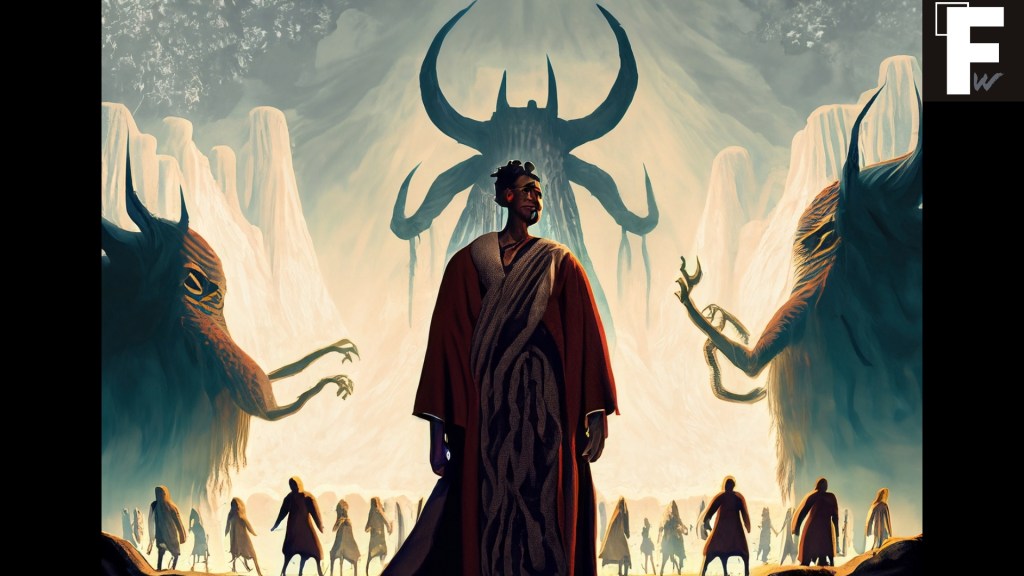
The Book of Enoch, excluded from the King James Bible, features the significant narrative of the Watchers—angels who rebelled and fathered the Nephilim. This story reshaped perceptions of angels and demons, influencing theology, eschatology, and even modern UFO folklore, where ancient accounts prompt speculation on extraterrestrial connections.

The Book of Enoch didn’t make the cut into the modern King James version of the Bible.  Yet, it is among the oldest Abrahamic religious texts known to exist.  It was found among the Dead Sea Scrolls in a cave in 1947.  One often stated reason for its exclusion from the Christian Bible is that it’s an exegesis(an explanation of an existing text) of a story found in Genesis. A story which briefly mentions events unfolding before the flood.

The Nephilim were on the earth in those days—and also afterward—when the sons of God went in to the daughters of humans, who bore children to them. These were the heroes that were of old, warriors of renown

Genesis 6:4

Yet, within the pages of the Book of Enoch a narrative of immense significance unfolds—the tale of the Watchers.

This account, found within the pages of the “Book of the Watchers,” stands as a cornerstone of the text and has reverberated through the corridors of religious thought for centuries. It is a narrative that has captured the imagination of scholars, theologians, and curious minds alike, leaving an indelible mark on the way we perceive celestial beings.

Shaping Perceptions of Angels and Demons

The story of the Watchers transcends the boundaries of a simple narrative. It has played a pivotal role in shaping our perceptions of angels and demons within the Judeo-Christian tradition.

Prior to this narrative, angels were often viewed as divine messengers and servants of God, embodying purity and obedience. However, the Watchers’ rebellion challenged this conventional understanding, introducing a complex dimension to celestial beings. They were no longer confined to a singular role but could also be agents of rebellion and corruption when swayed by earthly desires.

A Connection to UFO Folklore

Beyond its impact on religious thought, the story of the Watchers has found its place in the intriguing realm of UFO folklore. Researchers and enthusiasts have contemplated whether this ancient narrative holds clues to unexplained phenomena.

Some have wondered whether the tale of the Watchers might not be a mere allegory, but a reflection of a human and non-human hybridization program gone awry. This speculation leads to fascinating questions about the possibility of non-human involvement in human history and the idea of a program that was reset by those overseeing it.

An Ongoing Source of Inquiry

The narrative of the Watchers, with its layers of theological significance and its connection to contemporary discussions of UFOs and hybridization, remains a source of ongoing inquiry.

It exemplifies the enduring power of ancient texts to spark curiosity and exploration across diverse domains of knowledge. As we navigate the complex interplay of religious narratives, folklore, and modern interpretations, the story of the Watchers continues to challenge our perceptions and provoke thought-provoking discussions about the mysteries of the universe and our place within it.

The Watchers’ Descent:

The narrative unfolds with the descent of a group of celestial beings known as the Watchers. These angels, seduced by earthly desires, transgress divine boundaries by taking human women as their partners.

This forbidden union results in the birth of the Nephilim, a race of giants. The consequences of this celestial dalliance ripple through the narrative, setting the stage for profound theological exploration.

Influence on Angelology:

The story of the Watchers fundamentally reshaped the way angels were perceived in Judeo-Christian traditions. Prior to this narrative, angels were often seen as messengers of God, serving obediently in the heavenly realm. However, the Watchers’ rebellion portrayed angels in a different light—they could be agents of rebellion and corruption when led astray by their own desires.

This shift in perspective prompted deeper theological reflections on the nature of angels. It led to the development of angelology, a branch of theology dedicated to the study of angels.

Scholars and theologians grappled with questions about the free will of angels, their capacity for sin, and their role in the human experience. The story of the Watchers served as a foundational text for these discussions.

Emergence of Demonology:

Equally significant is the narrative’s influence on the development of demonology. The Watchers, once holy beings, become fallen angels as they succumb to their earthly desires.

This transformation raises questions about the nature of evil and the existence of malevolent entities. As the fallen angels father the Nephilim, they contribute to the corruption and wickedness in the world, further solidifying their association with malevolence.

The concept of fallen angels, driven by their own desires to rebel against the divine order, laid the groundwork for the emergence of demonology. Scholars began to explore the origins and characteristics of these fallen entities, paving the way for a deeper understanding of evil forces in the world.

Impact on Eschatology:

The narrative of the Watchers also left its imprint on eschatological thought—the study of end times and the final destiny of humanity. The Book of Enoch, with its vivid descriptions of the Watchers’ transgressions and divine judgment, contributed to the shaping of eschatological beliefs.

The fate of the Watchers, who are bound and cast into darkness as punishment for their actions, offered a glimpse into the consequences of cosmic disobedience. This imagery played a role in the development of apocalyptic thought, influencing discussions about the end of the world, divine judgment, and the ultimate resolution of good versus evil.

Impact on UFO Lore:

In relation to UAP lore, there are a few points of connection:

  1. Ancient Astronaut Theory: Some proponents of UAP lore and ancient astronaut theories suggest that the Nephilim were, in fact, extraterrestrial beings. They interpret the “sons of God” as aliens who visited Earth and had offspring with human women. This theory is part of a larger set of beliefs that suggest extraterrestrial beings have been involved in human history.
  2. Technological Anomalies: In some interpretations, the abilities or technologies attributed to the Nephilim in ancient texts are seen as evidence of advanced technology, possibly extraterrestrial or non-human in origin. This is analogous to how some modern UAP sightings involve reports of advanced technology.
  3. Cultural and Mythological Patterns: A broader connection is the way in which both Nephilim legends and UAP sightings reflect human culture’s deep interest in and speculation about beings from the sky or from other worlds. Both sets of lore deal with the idea of contact with non-human intelligences.
  4. Government and Religious Documents: Some UAP researchers look into historical religious and government documents for evidence of UAPs or extraterrestrial life, sometimes drawing parallels with stories like that of the Nephilim.

In summary, the story of the Watchers in the Book of Enoch serves as a pivotal narrative that profoundly influenced the development of thought surrounding angels, demons, and eschatology within Judeo-Christian traditions. It challenged conventional views of celestial beings, paving the way for in-depth theological explorations that continue to shape religious discourse to this day.

The Puzzling Phenomenon of Possession: Bridging Science and the Supernatural

The condition of possession is acknowledged by psychiatry and rare cases of supernatural possession can be remedied by spiritual healing.

The enigmatic phenomenon of possession has long been a subject of fascination, fear, and skepticism. In recent years, however, it has gained recognition in unexpected quarters, including the field of psychiatry. Experts from the fields of science, psychiatry and psychology have acknowledged the condition of possession.

Below is a collection of resources which demonstrated to us that the possession phenomenon continues into the modern era, and rare cases of what appears to be supernatural or paranormal cases of possession exist.

These resources are meant to accompany the discussion we had in our podcast episode you can find below. In the episode, we interview a person who witnessed a supernatural possession and go into more detail on our thoughts around the research.

Possession in the Modern Era

In May 2022, the Los Angeles Times featured an article titled “Exorcism: Increasingly frequent, including after US protests.” This source explores the rising frequency of exorcisms, even in the wake of social protests and upheavals. These accounts underscore the enduring belief in demonic forces and the perceived need for spiritual intervention in times of societal tension.

A woman walking through a haunted hallway with a ghost nearby.

Possession as Recognized by Psychiatry

Drawing on the work of psychiatrist Richard Gallagher, who has investigated both natural and supernatural cases, we find a bridge between science and the supernatural. Gallagher’s article, “As a psychiatrist, I diagnose mental illness. Also, I help spot demonic possession,” delves into his experiences diagnosing possession cases and the unexpected transformations he has witnessed. His journey from skepticism to belief highlights the complexities of this elusive phenomenon.

The Modern Landscape of Exorcism

In a parallel exploration, the Associated Press reported on the increased frequency of exorcisms in an article titled “Exorcism: Increasing Frequency“. The article discusses some insights into the challenges faced by exorcism teams, particularly in the midst of evolving social dynamics and crises. As with many teams dealing with upheaval in the face of increasing societal change, those dealing with possession could use more resources.

Bridging Science and the Supernatural

The recognition of possession by the American Psychiatric Association serves as a testament to the evolving landscape of psychiatric diagnosis. As psychiatry acknowledges possession, it prompts us to consider the interplay between the physical, mental, and spiritual aspects of this phenomenon. The field of psychiatry is increasingly open to entertaining hypotheses that challenge conventional wisdom.

Statistics and Insights

Statistics from Italy, as cited by the Los Angeles Times article, suggest that only a small fraction of those seeking help for possession are found to be genuinely possessed. This data underscores the rarity of such cases and the need for discernment when investigating claims of possession. Most clergy require a battery of mental health assessments prior to engaging in exorcism. This is both prudent and necessary.

Yet, when such a case is found, open-minded therapists and academics point to the idea that spiritual healing within the patients beliefs can be a remedy. We thought this paper in the Journal of Religion and Health titled “The Growing Evidence for ‘Demonic Possession’ : What Should Psychiatry’s Response be?” boasts a strong argument for spiritual healing as part of therapy.

Conclusion

In conclusion, the phenomenon of possession continues to defy easy categorization. As we navigate the intricate terrain where science and the supernatural converge, we are confronted with enduring mysteries that challenge our understanding of reality.

Five Remarkable Facts Regarding the Baghdad Batteries

The “Baghdad Batteries” remain a historical and ancient enigma. Did our ancient ancestors utilize electricity?

In the realm of archaeological enigmas, few artifacts have captured the imagination quite like the Baghdad Batteries. Discovered near Ctesiphon, Iraq in 1936, these peculiar objects have stirred debates and speculation about the ancient civilization’s mastery of electricity. While some experts dismiss these claims as far-fetched, a closer look at the evidence reveals a fascinating tale that challenges our understanding of the past. Here are five remarkable facts that hint at the possibility that an ancient civilization may have harnessed the power of electricity through the Baghdad Batteries.

1. A Curious Composition: Ceramic Pot, Copper Tube, and Iron Rod The Baghdad Battery consists of three primary components: a ceramic pot, a copper tube, and an iron rod. These seemingly disparate elements have sparked numerous theories about their purpose and function. The intriguing aspect lies in their assembly – the copper tube encases the iron rod, and both are housed within the ceramic pot. This arrangement raises questions about the artifact’s potential to generate electrical currents, akin to a rudimentary battery.

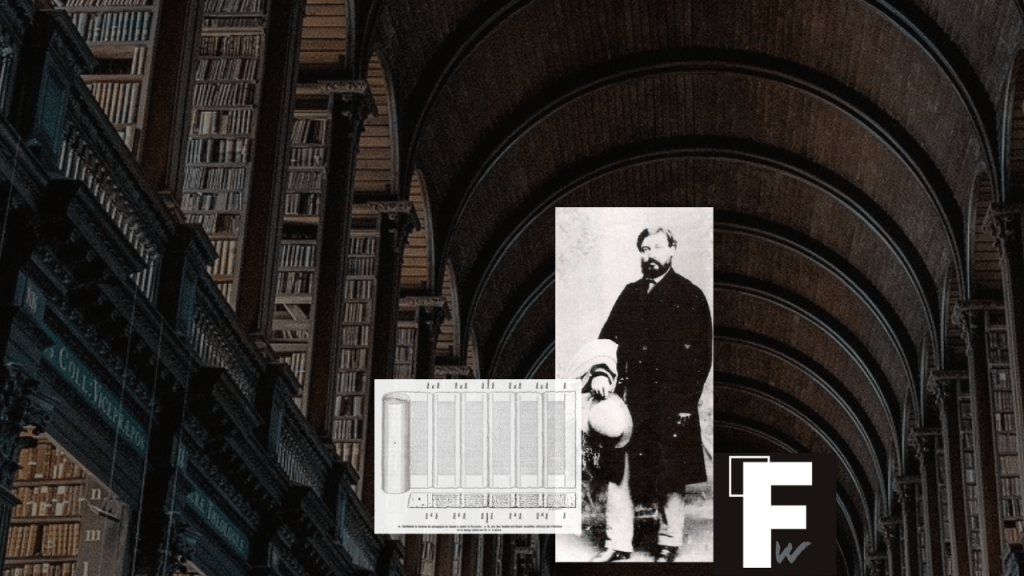
Fourteen Weeks in Physics 1878 – fair use

2. The Electrochemical Potential: Generating Voltage One of the most astonishing aspects of the Baghdad Battery is its alleged capacity to generate a voltage. Tests conducted on replicas of these artifacts have shown that when filled with a weak acid, such as vinegar or lemon juice, they can produce voltages ranging from 0.8 to nearly two volts. While these voltages may seem modest by modern standards, they raise the question of whether this ancient assembly was capable of carrying out electrochemical reactions.

3. An Ancient Age: Dating Back Millennia Dating back to approximately 2,000 years ago, the Baghdad Batteries predate many modern technological marvels. Their age places them in a time when the concept of electricity was virtually unknown to the ancient world. The mere existence of these objects implies a level of scientific understanding that challenges conventional historical narratives.

Olaf Tausch Oct, 2014 – Dendera Lights

4. The Purpose Debate: Electroplating and Beyond The purpose of the Baghdad Batteries has fueled spirited debates among historians, archaeologists, and scientists. While theories range from electroplating to electricity generation, one of the most intriguing possibilities is that these artifacts were used for electroplating precious metals onto objects. The controlled electrical currents generated by these batteries could have facilitated the deposition of metal coatings, an idea supported by the discovery of similar objects with residue consistent with electroplating processes.

5. Threats to Cultural Heritage: The Impact of Conflict The saga of the Baghdad Batteries took a distressing turn when some of these artifacts disappeared during the US-led Iraq invasion in 2003. The implications of this loss extend beyond the mere disappearance of historical objects – it highlights the broader impact of conflicts on cultural heritage. These artifacts, which held the potential to reshape our understanding of the past, were rendered even more elusive due to the turmoil of contemporary events.

In conclusion, the Baghdad Batteries remain an enigma that continues to captivate the imagination of scholars and enthusiasts alike. The combination of the artifact’s unique composition, the evidence of voltage generation, its ancient age, and the debates surrounding its purpose all point towards the tantalizing possibility that an ancient civilization might have harnessed electricity in ways that challenge our conventional understanding. While the skeptics’ arguments cannot be dismissed, the remarkable facts surrounding these artifacts invite us to contemplate the prospect that history might hold even more astonishing secrets than we currently comprehend.

References:

  1. Wikipedia: Baghdad Battery
  2. The Baghdad Battery: An Update
  3. BBC NEWS: Riddle of ‘Baghdad’s batteries’

Neil Armstrong and the Lost Library of Gold

The article discusses Neil Armstrong’s unexpected expedition in 1976 to find a legendary library of gold in Ecuador, which was linked to Father Carlo Crespi’s mysterious collection of artifacts. These artifacts, bearing unknown writing and ancient cultural similarities, sparked speculation about extraterrestrial origins and connections to ancient civilizations, attracting explorers and researchers.

We had to write this article because the whole thing sounds like Pulp Fiction from the 1930’s.  What’s most shocking about this story (besides the fact that Neil Armstrong did go searching for a lost library of gold in South America) is that it was so out of character for America’s first man on the moon. 

He was always such a steady guy, so in 1976 when he went down to Southeastern Ecuador to look for a lost library of gold…it counts as an anomaly.  In fact, outside of the moon landing, this is the most famous expedition of the intrepid adventurer known as: Neil.

The Discovery

The expedition began with a discovery.  A local Salesian priest named Father Carlo Crespi (1891-1982) worked with the indigenous people of Ecuador.  He was a revered humanitarian, academic and historian.  He is credited with acquiring the first film footage of the native Shuar people of the region in the 1920’s, and they liked him. 

They liked him a lot.  They began to bring him local artifacts they found as thanks for his kindness.  Many of the artifacts were metallic and included strange writing.

Father Carlo Crespi – With his Ethnogrpahic Collection – Wikidata

Crespi knew the natives were poor but proud.  While he thought they might be reluctant to accept donations, they would accept payment for the objects they brought to Crespi.  So, the villagers continued to bring Crespi objects and he would pay for them when he could (even if the objects were fake). 

The result was a collection of 50,000 artifacts from various periods of South American history ( and not just South American).  Many of them were authentic. Over time, Father Crespi is estimated to have collected 50,000 artifacts. The objects were kept in the courtyard of the church Maria Auxiliadora in Ecuador.  However, in 1962 there was a fire and many of the objects were lost.

Many of the remaining artifacts disappeared with the assumption they were sold to private collectors, claimed by the Vatican or just plain stolen.  Still, some of the artifacts remain as does photographic evidence of the collection and they contain numerous anomalies.

The objects bear similarities to artifacts from distant ancient cultures such as Babylon, Assyria, Egypt, China, and Africa.  The writing and alphabet on some of the objects is completely unknown and intricate.  It matches no known alphabet, ancient or otherwise. 

Furthermore, pyramids identical to the Egyptian pyramids (rather than the stepped pyramids of South America) are depicted along with a symbol resembling the “Eye of Horus” or “Eye of Providence.”  It can be seen hovering over the top of the pyramid the same way it can be seen on the dollar bill or The Great Seal of the USA. 

What remains of the objects is no longer accessible to the public and the origin and date of the artifacts remains unknown.  Naturally, this mystery attracted interest and speculation.

Depiction of a Pyramid – Father Crespi Collection

The Entrance to the Cave

In the 1960’s an explorer by the name of János Juan Móricz claimed to have discovered a library within a massive cave system which would come to be known as “La Cueva de los Tayos” or The Tayos Cave System.  He claimed to have wandered through the system until he came to a hall of man-made walls and architecture. 

Within these halls were tablets made of precious metals such as gold and silver with strange writing on them.  Móricz thought they contained the history of humanity.

He claimed the symbology on the artifacts resembled ancient Sumerian and Egyptian pieces.  However, once Móricz left the cave system he (apparently) lost track of the library but was able to still identify the entrance. 

The claims made by Móricz echoed the artifacts collected by Father Crespi, which made researchers wonder if Móricz had not found the source of the objects given to Crespi by the Natives.

Cueva de los Tayos, Ecuador – Google Maps

This theorizing culminated with the publication of a book by ancient astronaut theorist Erich Van Daniken titled “Gold of the Gods.”  In the book, Van Daniken expanded on the alleged findings of Móricz and publicized the idea that the Metal Library was extraterrestrial in origin. 

He believed the findings in Ecuador were similar to findings at other ancient sites, such as Nan Madol in Micronesia. Van Daniken argues these sites show contact between ancient cultures over vast distances and artifacts which go beyond coincidental, and point to past contact with ancient aliens and advanced technology.

Exploration

Stan Hall was a Scottish researcher and engineer with a penchant for exploration and adventure.  He became intrigued by Móricz ‘claims and attempted to mount an expedition. 

Through an acquaintance(they had a distant relation), Hall reached out to Neil Armstrong who was living on a farm in Ohio and teaching Aerospace Engineering.  For reasons of his own, Armstrong agreed to join Hall on the expedition and this added the star power needed for the expedition to gain resources.  Funding came from the governments of the United Kingdom and Ecuador, allowing Armstrong and Hall to pursue the “Metal Library” of legend.

In 1976 Hall and Armstrong entered the cave accompanied by more than a hundred people including top scientists, joint special forces and sperologists.  They did not find the library, but they did find evidence of human occupation along with a body dating back to 1500 BCE. 

They also found more than 100 new species of butterflies, 40 new species of bats and 200 new species of beetles.  It’s still one of the largest cave explorations ever conducted and Neil’s second most-famous adventure.

Legend of Los Tayos 1976 program

Today, Stan Hall’s grand-daughter Eileen Hall still explores the area and leads expeditions in the hopes of finding “The Metal Library.”  The cave system entered by Armstrong and Hall has been heavily explored since the 1970’s.  There are even tours into parts of it. 

Yet, there is controversy as to how much of the cave has been explored.  There is also debate as to whether or not Armstrong and Hall went through the right entrance to find the Metal Library.  Adventurers still head to the Tayos caves today in hopes of finding the hidden pathway of Juan Móricz and the Metal Library of the ancient aliens.

Analysis

Armstrong’s involvement and evidence of Father Crespi’s collection are the two strangest pieces of evidence in this affair.  Stan Hall was also known as an analytical and logical man.  While less is known of Juan Móricz, who did know the entrance to the cave system.  Yet, he (suspiciously)  did not bring back evidence of the metal library or its exact location.  Crespi’s collection is a complete unknown. 

What remains of it might be in the Vatican museum or has been taken by private collectors and thieves, which would make them very hard to verify.  Finding and dating the objects in Crespi’s collection seems to be the shortest and most logical path to determining whether or not they are authentic and anomalous. So, we’ll hope one turns up available for study. Until then, we can hope one of the present day adventurers into the unknown hands us a metal library card.

Göbekli Tepe : Our Oldest Architecture and a Reminder

Göbekli Tepe, a 12,000-year-old archaeological site in Southern Turkey, predates Stonehenge by 6,000 years and may have served as a temple or ancient observatory. Its advanced architecture and artistic reliefs challenge previous beliefs about early human civilization and agriculture, reshaping our understanding of human history before and during the Younger Dryas event.

At 12,000 years old Göbekli Tepe predates Stonehenge by at least 6000 years. That’s a long time. That’s as long ago as Stonehenge was built compared to where we are now.

So, if people from the era of Stonehenge found Göbekli Tepe, it looked to them like Stonehenge does to us today. That’s old. The site sits over 8 hectares on an artificial mound in what is now Southern Turkey and draws in researchers from around the world.

The structures qualify as architecture by any definition:

Architecturethe art or science of building

specifically the art or practice of designing and building structures and especially habitable ones

Merriam Webster Dictionary

The buildings our ancient ancestors erected were stylized, functional and habitable. That counts as architecture on all fronts. The current thinking around Göbekli Tepe’s function is that it served as a temple (or group of temples) and meeting area.

Goods were likely exchanged and gatherings certainly occurred here for religious purposes. This is all occurring at a time when farming and agriculture is not supposed to exist. Which is the first of many mysteries surrounding Göbekli Tepe.

These buildings were erected during what is considered the “Pre-Pottery Neolithic” era, but that term (and what it indicates) was invented prior to discovering Göbekli Tepe.

Clearly, we see a civilization far ahead of where scientific theory thought early man was prior to understanding the significance of Göbekli Tepe in 1994. The layout of the various buildings show an understanding of geometric shapes and the layout of three main structures follow an equilateral triangle.

Beytullah eles – Wikimedia commons

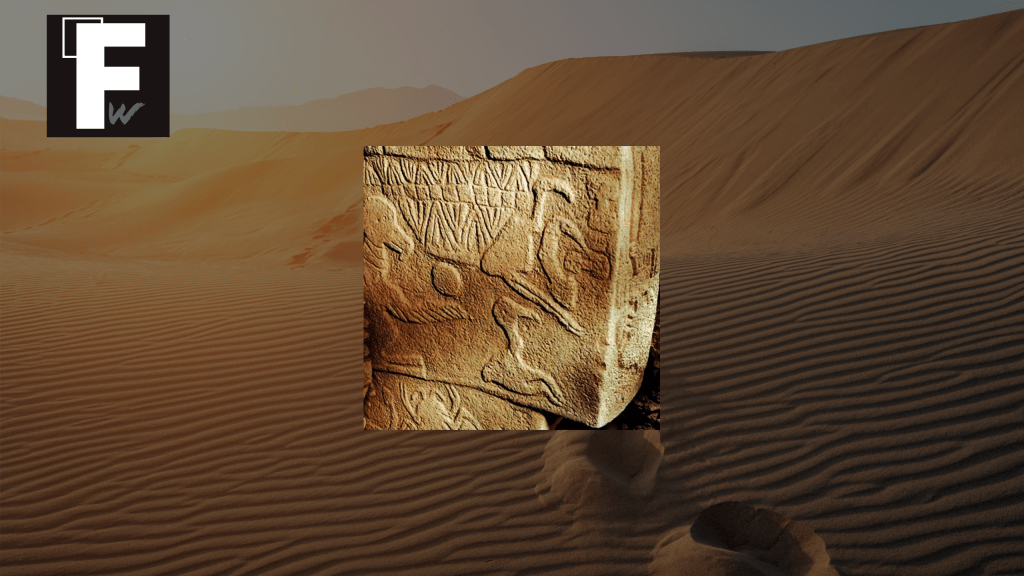
The art at Göbekli Tepe depicts a variety of animals and events carved in reliefs on massive stone pillars up to 5 meters high. The art shows a style and aesthetic far more advanced than would have been expected in this period (This is supposed to be Pre-Pottery Neolithic era). Of particular interest among the carvings is “The Vulture Stone.”

Sue Fleckney – CC FLikr

The Vulture Stone includes a depiction of a vulture holding an orb, egg or sphere. The significance of the sphere is debated. Some scholars say it points to the existence of a Vulture cult and the structure is a temple to this cult. Yet, further down the rock we see a relief of a scorpion and headless man. The headless man is thought to represent a catastrophe and a team of scientists from the UK think they may understand this special rock.

The Edinbugh team ran computer simulations and found the carvings on the Vulture Stone likely represented constellations. In fact, Göbekli Tepe may not have been a temple. It was likely an ancient observatory. This observatory appears to have predicted and recorded a mini ice age known as “The Younger Dryas” which occurred around 12,900 to 11,700 B.C.E..

The Younger Dryas was an incredibly important event in the history of humanity. It is believed the colder climate forced humanity to switch from nomadic hunter and gatherers to a more sedentary agriculture-based civilization. The rise in agriculture and large societies is what allowed us to create cities and share knowledge. Resulting in the evolution of our technology and science.

Yet, here in Göbekli Tepe we find a civilization which existed prior to (or on the edge of) the Younger Dryas which undoubtedly was able to process wheat. The existence of agriculture during the building and occupation of Göbekli Tepe is still debated.

We at Fortean Winds would guess that a structure of that size was not erected without some form of agriculture to feed its people. We’d go so far as to guess…they grew the #$%@ wheat.

Scientific theory can be slow to change…

Göbekli Tepe was occupied for roughly a thousand years before, for completely unknown reasons, the occupants filled it in and left. Leaving us with yet one more history mystery to uncover, and it is still literally being uncovered. If you were taught history prior to the mid-1990s you never heard of the place, and everything your history teacher was telling you about pre-pottery man…was about to change.

The history books still haven’t caught up, and they can’t. This place changes everything we knew about ancient man. So, if you’re someone who is fascinated with our ancient past. Or, if you just love the fact science is always changing…keep an eye on the discoveries being made at Göbekli Tepe. We’ve given you some good links here to start researching, but the significance of this place is still being uncovered, and there are mysteries here YOU can help uncover. Here’s a good one to start.

In 2003, Researcher Klaus Schmidt found the mound is positioned in a location filled with geomagnetic anomalies.

In 2003 a geomagnetic survey could demonstrate that
the prediction based on the archaeological surface investigations at Göbekli Tepe, that round or oval enclosures
exist all over the site and are not restricted to a specific
part of the mound, was right. More than ten large enclosures could be located in the geomagnetic map

Klaus Schmidt (NEO-LITHICS 2/03)

The connection between the Vulture Rock and the constellations was made in 2019. Our past is constantly changing and with it comes a new understanding of our present. Göbekli Tepe is a reminder to all of we still have much to learn and must continue to learn. To us at Fortean Winds, that is just plain EXCITING.

The Curious Case of Moses Wilhelm Shapira

Moses Wilhelm Shapira, a 19th-century antiquities dealer, gained notoriety for discovering the controversial “Shapira Strips,” potentially an ancient biblical relic. Despite initial declarations of forgery leading to his suicide, discussions around the scrolls’ authenticity persist. This case highlights the tension between evolving historical narratives, faith, and scientific inquiry.

The revered Fortean John A. Keel wrote about Moses Wilhelm Shapira. A 19th Century antiquities dealer who died of suicide by revolver in a hotel in Rotterdam. He also may have found the most exceptional biblical relic of the modern age.

You can find Moses’s story recounted by John Keel in “The Eighth Tower” on page 17, but it’s a complex story which has evolved some. Even in the last year. We thought the Wikipedia entry on Moses was solid if you’d like more information after our summary below.

Moses was an an adventurous buisnessman in the 19th Century. He became infamous during the relic craze of the 1880’s. Some of his antiquities were proven to be genuine and some were proven to be hoaxes.

His most famous and controversial find was the “Shapira Strips,” which contained a different version of the book of Deuteronomy and an eleventh commandment: “Thou shalt not hate thy brother in thy heart: I am GOD, thy GOD.”

Shapira Scrolls Rendering *public domain

When Moses presented these scrolls to experts at the time, they declared them a forgery. This disgrace ultimately lead to Moses taking his own life. However, that is not where the story ends, and it didn’t end in John’s book either. It’s still debated today. If they’re proven to be authentic, these scrolls would be about as old as the Dead Sea Scrolls. And that 11th Commandment might be hard for some people to take to take.

The Dead Sea Scrolls are used as evidence by some biblical scholars of divine intervention. The modern Christian Bible IS remarkably similar to the text of the Dead Sea Scrolls. Their accuracy over time IS remarkable. Yet, if this is proof of divine words, aren’t all of the Dead Sea Scrolls divine? Even the texts found by Moses Wilhelm Shapira?

One of the more interesting open questions is how Moses came to be in possession of these scrolls. Here we had a businessman with a spotty past in relics. How did he get a hold of (possibly) one of the greatest historical biblical finds of all time? According to Keel, some shepherds wandered into his shop and offered them up. Shapira’s account of how he came into possession of the scrolls varies. We find Keel’s account more likely given Shapira’s penchant for showmanship.

Why does it matter? Beyond the historical and biblical significance of Moses Wilhelm Shapira’s find, we see how quickly foundational theory becomes forgotten. Regardless of whether or not Shapira’s find is proven true, fragments of the Book of Enoch were found among the Dead Sea Scrolls. Yet, they didn’t make it into most current versions of the Bible. In case you’re unfamiliar, Enoch’s book is a wild ride.

Biblical history like all other history is subject to constant change caused by new discovery.

Does this mean there is no God? No Jesus? No Christian Church? Of course not. Shapira himself converted to Christianity. As a society we’ve unnecessarily conflated history and fact with religion. If our standard of what God intended to say is dictated by the age of his words, God will always be changing his mind. Religion is Faith pure and simple.

The Curious Case of Moses Wilhelm Shapira remains unsolved and as such becomes a grand reminder: Even our deepest held beliefs are subject to change. We shouldn’t apologize for changing our mind based on new information. For example, we at Fortean Winds are people who believe wholeheartedly in science, and we’ve been proven wrong time and time again.

To us, that is science. We’re all just learning. So, let’s be open to new discoveries and follow their threads wherever they may lead. Keep your faith close to you while we do, our research has lead us to believe Faith has a power of its own.

We do believe science will ultimately solve the mystery of the authenticity of Moses Wilhelm Shapira’s find. What that means is entirely up to you.