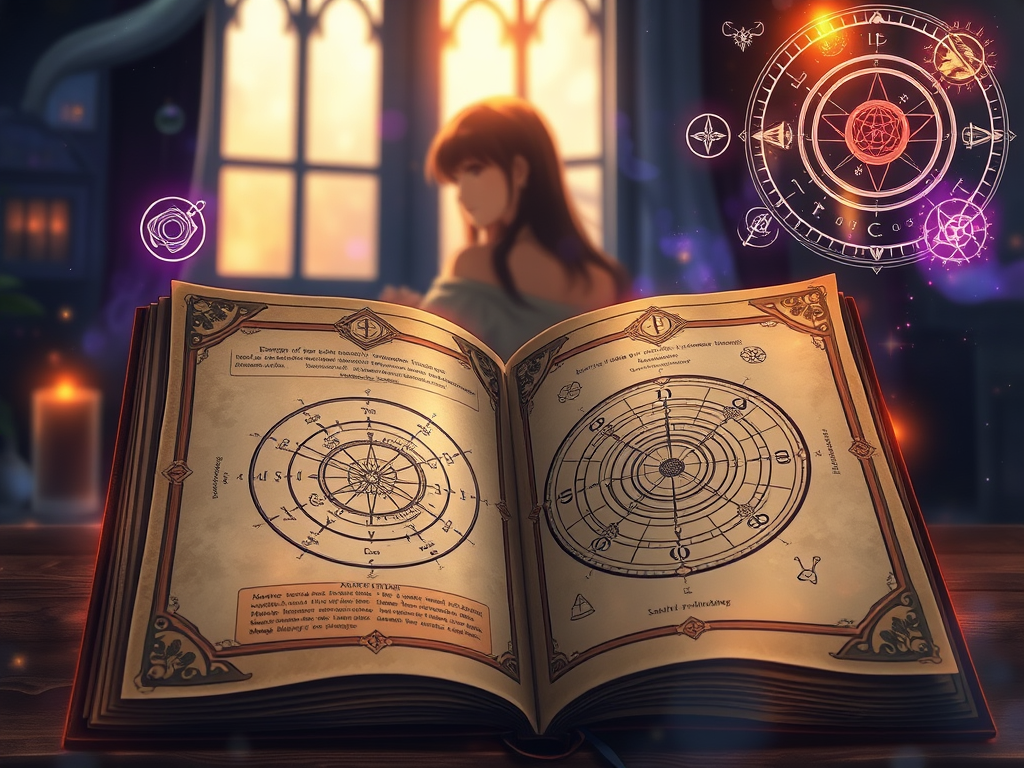
Grimoires, often considered arcane manuals for magic, might also be viewed as ancient blueprints for understanding and manipulating energy, consciousness, and even space-time. By examining their contents through this lens, we can explore whether these texts contain principles or methodologies that resonate with modern scientific concepts.
This article builds on findings from previous explorations (Part 1 and Part 2) into symbolism and rituals, delving into the technological implications of the practices described in grimoires. By examining their encoded practices, we can hypothesize how ancient practitioners conceptualized the universe and its forces.
1. Energy Manipulation: Harnessing the Cosmos
Grimoires frequently reference the harnessing of energy from celestial, elemental, and terrestrial sources. These descriptions hint at an understanding of vibrational principles, which align with modern theories of energy and resonance.
Cosmic and Elemental Energies
- Examples:
- The Heptameron prescribes rituals that align with the energies of the seven classical planets, suggesting a framework for channeling celestial influences.
- The Key of Solomon details the crafting of talismans using metals associated with specific planets (e.g., gold for the Sun, silver for the Moon), drawing on celestial configurations to imbue objects with power.

- Purpose of this chart: Demonstrates the dominance of planetary energies in magical practices, highlighting how grimoires sought to align human actions with cosmic forces.
- Analysis:
- Planetary energies dominate because they are believed to influence human fate and emotions, offering a framework for ritual effectiveness.
- Ritual diagrams in texts like the Heptameron suggest careful positioning of tools to channel these energies, reminiscent of modern concepts of energy fields.
Sound and Vibrations
- Examples:
- The Goetia emphasizes specific vocalizations, such as chanting “IAO” and invoking divine names like “Adonai,” which practitioners believed had inherent vibrational power.
- Instructions often include the use of harmonic tones and repetition, aligning with the modern understanding of sound therapy’s effects on the brain.
- Speculation:
- These chants could act as a tool for inducing altered states of consciousness, amplifying focus, and synchronizing mental and physical energy with the cosmos.
2. Mind-Matter Interaction: The Power of Intention
Grimoires place significant emphasis on the mental and psychological state of the practitioner. This suggests an understanding of how intention and focus shape outcomes, aligning with modern theories of mind-matter interaction.
Psychic Phenomena
- Examples:
- The Ars Notoria describes visualization techniques for divine connection and mastery of knowledge, akin to modern meditative practices.
- The Book of Abramelin emphasizes mental purity and clarity, requiring practitioners to undergo prolonged rituals of fasting and prayer.
- Data points: Visualization (40%), Meditation (30%), Fasting (15%), Mental Focus (50%).
- Notes: Demonstrates the high importance placed on mental preparation across grimoire rituals.

- Analysis:
- Over half of rituals rely on altered states of consciousness to connect with spiritual realms or manifest desired outcomes.
- Instructions for mindfulness and focus echo techniques in modern psychological disciplines.
Manifestation and Outcomes
- Examples:
- In the Goetia, summoning spirits requires precise intention and confidence, as doubt is believed to weaken the ritual’s power.
- Banishment rituals in the Clavicula Salomonis stress emotional detachment, suggesting that neutrality ensures clarity of intention.
3. Time and Space Manipulation: Beyond the Physical
References to temporal and spatial anomalies in grimoires suggest advanced metaphysical principles, hinting at how practitioners perceived the universe.
Temporal Anomalies
- Examples:
- The Ars Notoria includes instructions for perceiving distant events, a precursor to remote viewing techniques explored in modern parapsychology.
- The Book of Abramelin describes time dilation effects during meditative states, aligning with subjective experiences of altered consciousness.

Geometric Models
- Examples:
- Protective circles and ritual diagrams in the Key of Solomon incorporate sacred geometry, such as concentric circles and pentagrams, which symbolize harmony and balance.
- Alignments between geometric shapes and celestial movements mirror modern models of energy flow.
- Open Question: Do these diagrams prefigure modern understandings of energy dynamics and space-time relationships.
4. Interdisciplinary Connections: Bridging Ancient and Modern
Grimoires describe phenomena and tools that parallel concepts in modern science, offering intriguing possibilities for interdisciplinary exploration.
Ancient Technologies
- Examples:
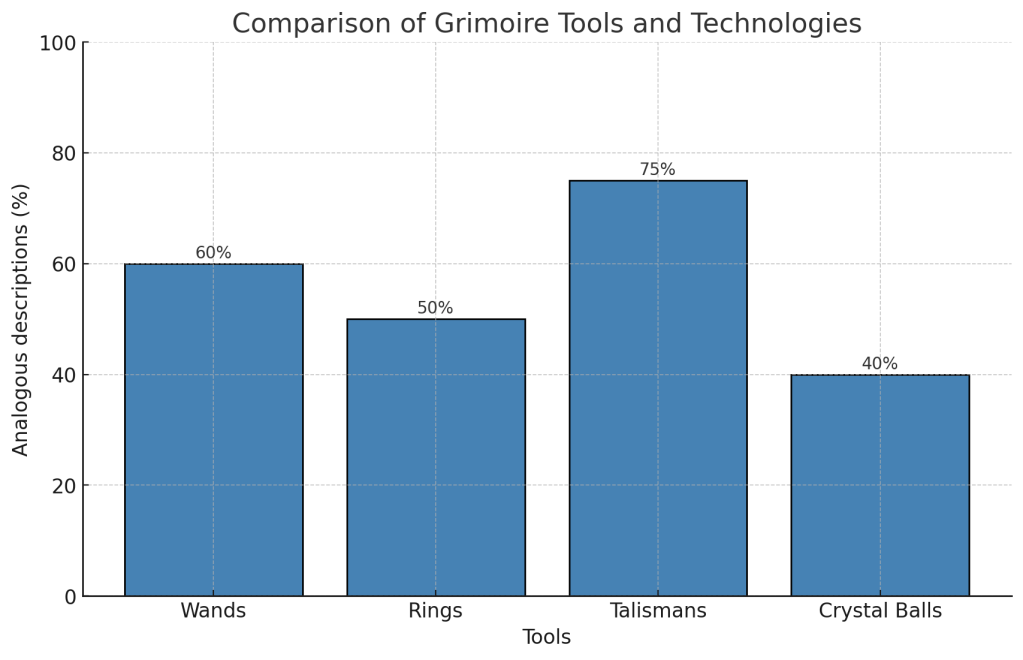
- Tools like wands, engraved rings, and talismans resemble circuit-like systems designed to channel energy.
- The Picatrix discusses cosmic energy flows, which parallel modern concepts of energy transference.
- Data points: Wands (60%), Rings (50%), Talismans (75%), Crystal Balls (40%).
Quantum Physics
- Examples:
- The Book of Abramelin’s focus on intention mirrors quantum theories about observer influence.
- The Goetia describes spirit communication that resonates with concepts of quantum entanglement.
- Notes: Highlights shared principles such as non-locality and energy flow.
Conclusion: Are Grimoires the Science of Their Time?
Grimoires represent a codification of unseen forces, offering insights into energy, consciousness, and metaphysical principles. These texts appear to bridge the mystical and the scientific, serving as precursors to modern explorations of reality.
By analyzing grimoires through the lens of data and interdisciplinary study, we uncover patterns that enrich our understanding of human attempts to engage with the universe’s mysteries. Through this exploration, the ancient and modern converge, unveiling a shared origin and understanding.

 Fortean Winds: Scientific Research into the Unexplained, Paranormal and Anomalous
Leave a comment