Göbekli Tepe : Our Oldest Architecture and a Reminder

Göbekli Tepe, a 12,000-year-old archaeological site in Southern Turkey, predates Stonehenge by 6,000 years and may have served as a temple or ancient observatory. Its advanced architecture and artistic reliefs challenge previous beliefs about early human civilization and agriculture, reshaping our understanding of human history before and during the Younger Dryas event.

At 12,000 years old Göbekli Tepe predates Stonehenge by at least 6000 years. That’s a long time. That’s as long ago as Stonehenge was built compared to where we are now.

So, if people from the era of Stonehenge found Göbekli Tepe, it looked to them like Stonehenge does to us today. That’s old. The site sits over 8 hectares on an artificial mound in what is now Southern Turkey and draws in researchers from around the world.

The structures qualify as architecture by any definition:

Architecturethe art or science of building

specifically the art or practice of designing and building structures and especially habitable ones

Merriam Webster Dictionary

The buildings our ancient ancestors erected were stylized, functional and habitable. That counts as architecture on all fronts. The current thinking around Göbekli Tepe’s function is that it served as a temple (or group of temples) and meeting area.

Goods were likely exchanged and gatherings certainly occurred here for religious purposes. This is all occurring at a time when farming and agriculture is not supposed to exist. Which is the first of many mysteries surrounding Göbekli Tepe.

These buildings were erected during what is considered the “Pre-Pottery Neolithic” era, but that term (and what it indicates) was invented prior to discovering Göbekli Tepe.

Clearly, we see a civilization far ahead of where scientific theory thought early man was prior to understanding the significance of Göbekli Tepe in 1994. The layout of the various buildings show an understanding of geometric shapes and the layout of three main structures follow an equilateral triangle.

Beytullah eles – Wikimedia commons

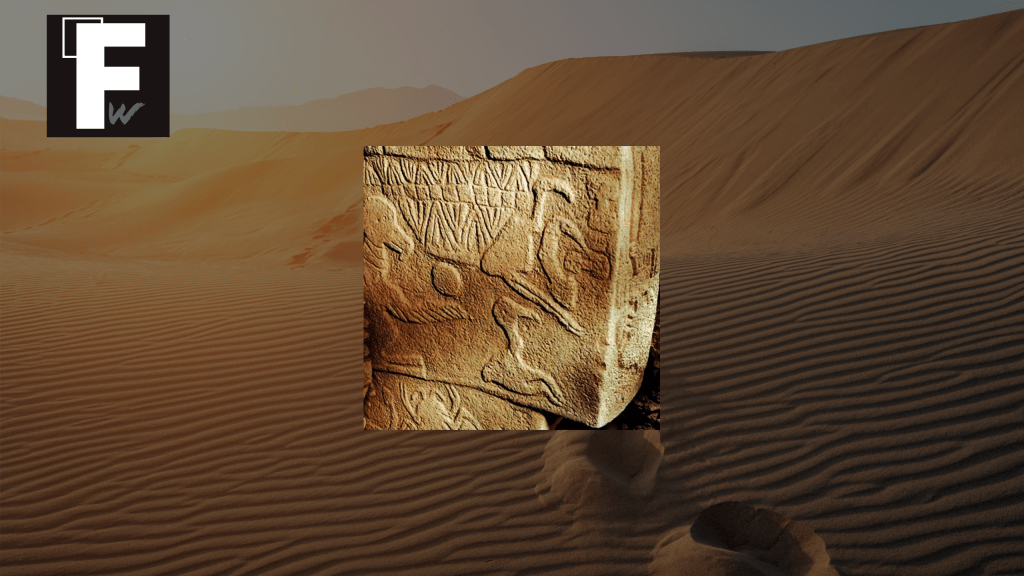
The art at Göbekli Tepe depicts a variety of animals and events carved in reliefs on massive stone pillars up to 5 meters high. The art shows a style and aesthetic far more advanced than would have been expected in this period (This is supposed to be Pre-Pottery Neolithic era). Of particular interest among the carvings is “The Vulture Stone.”

Sue Fleckney – CC FLikr

The Vulture Stone includes a depiction of a vulture holding an orb, egg or sphere. The significance of the sphere is debated. Some scholars say it points to the existence of a Vulture cult and the structure is a temple to this cult. Yet, further down the rock we see a relief of a scorpion and headless man. The headless man is thought to represent a catastrophe and a team of scientists from the UK think they may understand this special rock.

The Edinbugh team ran computer simulations and found the carvings on the Vulture Stone likely represented constellations. In fact, Göbekli Tepe may not have been a temple. It was likely an ancient observatory. This observatory appears to have predicted and recorded a mini ice age known as “The Younger Dryas” which occurred around 12,900 to 11,700 B.C.E..

The Younger Dryas was an incredibly important event in the history of humanity. It is believed the colder climate forced humanity to switch from nomadic hunter and gatherers to a more sedentary agriculture-based civilization. The rise in agriculture and large societies is what allowed us to create cities and share knowledge. Resulting in the evolution of our technology and science.

Yet, here in Göbekli Tepe we find a civilization which existed prior to (or on the edge of) the Younger Dryas which undoubtedly was able to process wheat. The existence of agriculture during the building and occupation of Göbekli Tepe is still debated.

We at Fortean Winds would guess that a structure of that size was not erected without some form of agriculture to feed its people. We’d go so far as to guess…they grew the #$%@ wheat.

Scientific theory can be slow to change…

Göbekli Tepe was occupied for roughly a thousand years before, for completely unknown reasons, the occupants filled it in and left. Leaving us with yet one more history mystery to uncover, and it is still literally being uncovered. If you were taught history prior to the mid-1990s you never heard of the place, and everything your history teacher was telling you about pre-pottery man…was about to change.

The history books still haven’t caught up, and they can’t. This place changes everything we knew about ancient man. So, if you’re someone who is fascinated with our ancient past. Or, if you just love the fact science is always changing…keep an eye on the discoveries being made at Göbekli Tepe. We’ve given you some good links here to start researching, but the significance of this place is still being uncovered, and there are mysteries here YOU can help uncover. Here’s a good one to start.

In 2003, Researcher Klaus Schmidt found the mound is positioned in a location filled with geomagnetic anomalies.

In 2003 a geomagnetic survey could demonstrate that
the prediction based on the archaeological surface investigations at Göbekli Tepe, that round or oval enclosures
exist all over the site and are not restricted to a specific
part of the mound, was right. More than ten large enclosures could be located in the geomagnetic map

Klaus Schmidt (NEO-LITHICS 2/03)

The connection between the Vulture Rock and the constellations was made in 2019. Our past is constantly changing and with it comes a new understanding of our present. Göbekli Tepe is a reminder to all of we still have much to learn and must continue to learn. To us at Fortean Winds, that is just plain EXCITING.

The Curious Case of Moses Wilhelm Shapira

Moses Wilhelm Shapira, a 19th-century antiquities dealer, gained notoriety for discovering the controversial “Shapira Strips,” potentially an ancient biblical relic. Despite initial declarations of forgery leading to his suicide, discussions around the scrolls’ authenticity persist. This case highlights the tension between evolving historical narratives, faith, and scientific inquiry.

The revered Fortean John A. Keel wrote about Moses Wilhelm Shapira. A 19th Century antiquities dealer who died of suicide by revolver in a hotel in Rotterdam. He also may have found the most exceptional biblical relic of the modern age.

You can find Moses’s story recounted by John Keel in “The Eighth Tower” on page 17, but it’s a complex story which has evolved some. Even in the last year. We thought the Wikipedia entry on Moses was solid if you’d like more information after our summary below.

Moses was an an adventurous buisnessman in the 19th Century. He became infamous during the relic craze of the 1880’s. Some of his antiquities were proven to be genuine and some were proven to be hoaxes.

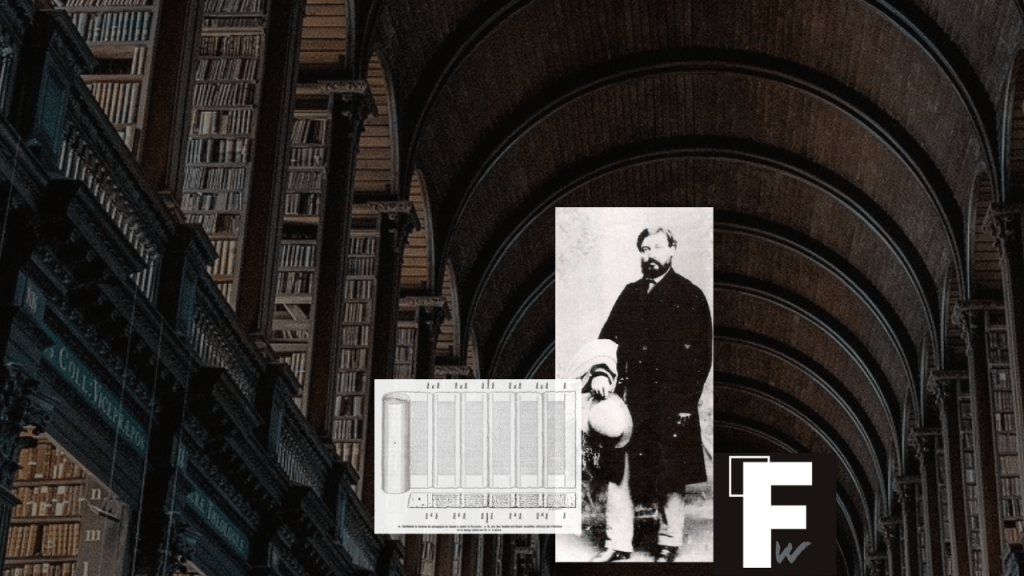
His most famous and controversial find was the “Shapira Strips,” which contained a different version of the book of Deuteronomy and an eleventh commandment: “Thou shalt not hate thy brother in thy heart: I am GOD, thy GOD.”

Shapira Scrolls Rendering *public domain

When Moses presented these scrolls to experts at the time, they declared them a forgery. This disgrace ultimately lead to Moses taking his own life. However, that is not where the story ends, and it didn’t end in John’s book either. It’s still debated today. If they’re proven to be authentic, these scrolls would be about as old as the Dead Sea Scrolls. And that 11th Commandment might be hard for some people to take to take.

The Dead Sea Scrolls are used as evidence by some biblical scholars of divine intervention. The modern Christian Bible IS remarkably similar to the text of the Dead Sea Scrolls. Their accuracy over time IS remarkable. Yet, if this is proof of divine words, aren’t all of the Dead Sea Scrolls divine? Even the texts found by Moses Wilhelm Shapira?

One of the more interesting open questions is how Moses came to be in possession of these scrolls. Here we had a businessman with a spotty past in relics. How did he get a hold of (possibly) one of the greatest historical biblical finds of all time? According to Keel, some shepherds wandered into his shop and offered them up. Shapira’s account of how he came into possession of the scrolls varies. We find Keel’s account more likely given Shapira’s penchant for showmanship.

Why does it matter? Beyond the historical and biblical significance of Moses Wilhelm Shapira’s find, we see how quickly foundational theory becomes forgotten. Regardless of whether or not Shapira’s find is proven true, fragments of the Book of Enoch were found among the Dead Sea Scrolls. Yet, they didn’t make it into most current versions of the Bible. In case you’re unfamiliar, Enoch’s book is a wild ride.

Biblical history like all other history is subject to constant change caused by new discovery.

Does this mean there is no God? No Jesus? No Christian Church? Of course not. Shapira himself converted to Christianity. As a society we’ve unnecessarily conflated history and fact with religion. If our standard of what God intended to say is dictated by the age of his words, God will always be changing his mind. Religion is Faith pure and simple.

The Curious Case of Moses Wilhelm Shapira remains unsolved and as such becomes a grand reminder: Even our deepest held beliefs are subject to change. We shouldn’t apologize for changing our mind based on new information. For example, we at Fortean Winds are people who believe wholeheartedly in science, and we’ve been proven wrong time and time again.

To us, that is science. We’re all just learning. So, let’s be open to new discoveries and follow their threads wherever they may lead. Keep your faith close to you while we do, our research has lead us to believe Faith has a power of its own.

We do believe science will ultimately solve the mystery of the authenticity of Moses Wilhelm Shapira’s find. What that means is entirely up to you.