
The Occult History — Chapter 2 of 10
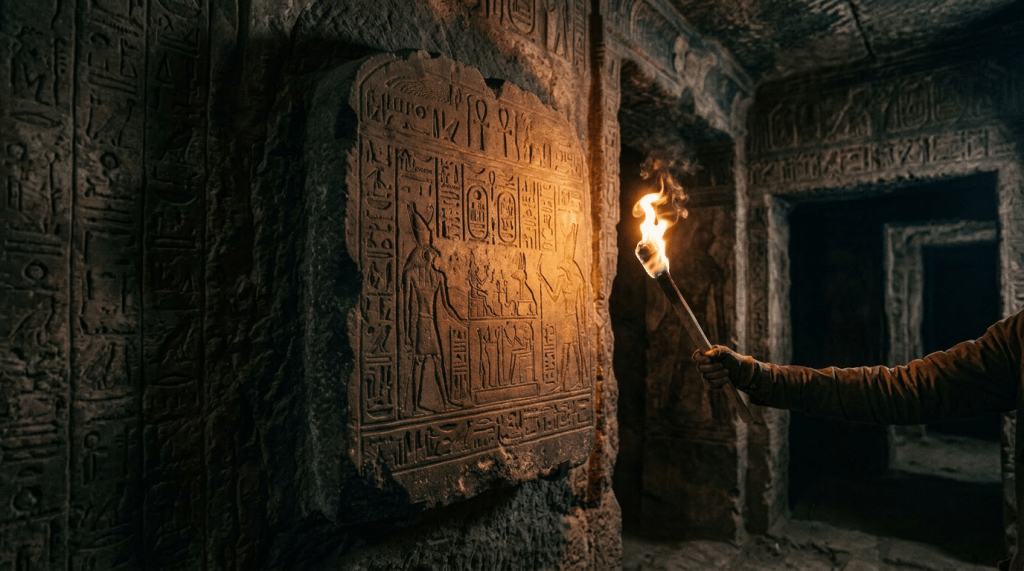
Every tradition has a starting point. For the occult, most scholars anchor it in Egypt — not because Egypt invented hidden knowledge, but because Egypt is where the oldest surviving evidence concentrates. Ritual texts. Temple cosmologies. Mystery schools with initiatory structures that later traditions would borrow, adapt, and claim as their own inheritance for the next three thousand years.
That’s the clean version. The messier version is that we don’t actually know how far back this goes. Egypt codified something. It’s less clear that Egypt originated it. Mesopotamia and Sumer were running parallel systems — and some of what shows up in Babylonian magic texts predates the Egyptian material we can date. The trail goes cold before it reaches a beginning.
What we can trace is the transmission line. Egypt to Greece. Greece to Rome. Rome into early Christianity and then into the Catholic Church. From there, underground, suppressed, periodically condemned — and periodically revived by the same institutions doing the suppressing. That thread is what this series is following.
Egypt: The Source Record
Egyptian occult practice wasn’t a fringe activity. It was state infrastructure. The priests of Thoth, Isis, and Osiris weren’t operating on the margins — they ran the temple complexes, administered the afterlife bureaucracy, and held knowledge that political power depended on. The Book of the Dead isn’t a religious text in the modern sense. It’s an operational manual for navigating post-death reality, full of spells, passwords, and procedural steps. You needed the right words in the right order or the weighing of the heart went badly.
The mystery schools — particularly those associated with Osiris at Abydos and Isis at Philae — operated on an initiatory model. You didn’t get the full cosmology upfront. You earned it in stages, each level unlocking more of the underlying framework. This is the template that Freemasonry, Rosicrucianism, the Golden Dawn, and virtually every Western esoteric order since would inherit. The structure itself is the occult inheritance, not just the content.
The big unresolved question: where did Egypt get it? The Hermetic texts — compiled into the Corpus Hermeticum in the early centuries AD — attribute their wisdom to Hermes Trismegistus, a figure identified with the Egyptian god Thoth. The claim is that this knowledge is primordial, pre-dynastic, recovered rather than invented. Renaissance scholars believed the Hermetic texts were older than Moses. They were wrong on the dating but possibly not wrong about the underlying claim — that the framework was being transmitted from something much older.
That’s speculation. The evidence is that Egyptian ritual technology is sophisticated, systematic, and clearly the product of accumulated development. Whatever it derived from, it’s where the Western occult tradition anchors itself.
Mesopotamia: The Parallel Track
Running alongside Egypt — and in some respects predating it — is Mesopotamia. Sumer, Babylon, Akkad. The magical tradition here is less concerned with cosmic initiation and more focused on practical application: binding spells, protective amulets, divination systems, demon catalogues. The Maqlu series — Babylonian anti-witchcraft rituals — runs to nine tablets. The Shurpu covers ritual purification. These aren’t folk remedies. They’re formal, systematized, priestly texts.
Mesopotamian demonology in particular becomes load-bearing for everything that follows. The classification of spirits — beneficial, neutral, hostile; bound to specific locations, functions, or times — feeds directly into Jewish mysticism, which feeds into early Christian cosmology, which eventually produces the grimoire tradition of medieval Europe. The line from a Sumerian demon tablet to the Ars Goetia is long but traceable.
The other Mesopotamian contribution is astrology as a systematic framework. Not horoscope astrology — that’s a later Greek development — but the idea that celestial movements encode information about earthly events and that trained observers can read it. Babylonian astronomical records are extraordinarily precise. The observation infrastructure that produces those records is the same infrastructure that produces the astrological interpretive tradition. Both are priestly knowledge, both are restricted, both become part of what the occult carries forward.
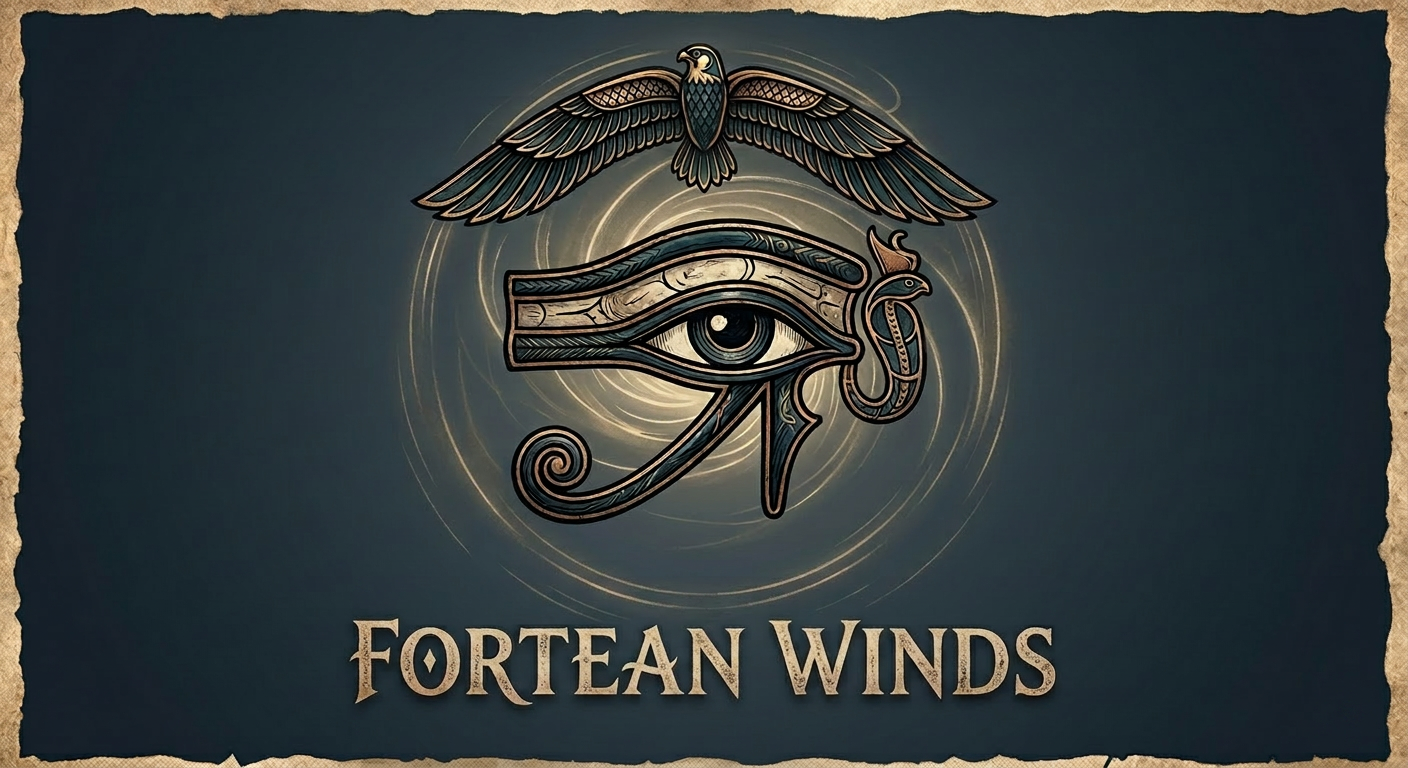
The Eye of Horus: What the Symbol Actually Carries
Before continuing the transmission line, it’s worth stopping on one symbol. The Eye of Horus shows up everywhere — jewelry, tattoos, company logos, conspiracy theories about pyramid caps. Most of those uses strip it to aesthetics. The original meaning is more specific and more interesting.
Greece and the Transformation
When Greek culture absorbed Egyptian and Mesopotamian material — through trade, conquest, and the cosmopolitan environment of Alexandria — something happened to the transmission. The Greeks systematized it philosophically. Egyptian ritual knowledge and Babylonian celestial observation got absorbed into frameworks that were trying to explain why things worked, not just that they did.
Plato’s dialogues carry significant esoteric content — the allegory of the cave, the world of forms, the Timaeus cosmology — that later Neoplatonists would develop into a complete metaphysical system. Pythagoras, before Plato, reportedly spent years studying in Egypt and brought back a mathematics that was simultaneously numerical and mystical. The idea that number encodes cosmic structure — that the universe has a mathematical architecture beneath the surface — is Pythagorean, and it’s still alive in every numerological and Kabbalistic system running today.
The Greek mystery schools — Eleusis most prominently, also Samothrace and the Orphic tradition — operated on the same initiatory model as the Egyptian ones. You went in, you experienced something, you came out changed, and you didn’t discuss the specifics. What happened at Eleusis specifically is still not fully known. We have accounts of the setting and the general structure. The content of the vision — what the initiates actually experienced — was kept. Thousands of people went through over centuries and it stayed secret. That’s a more impressive operational security record than most modern intelligence agencies.
Alexandria, from the third century BCE onward, is where the synthesis really happens. The library, the Mouseion, the proximity of Egyptian priests and Greek philosophers and Jewish scholars — this is where Hermeticism as a coherent tradition gets assembled. The Corpus Hermeticum texts, though compiled later, draw on material generated in this environment. So does early Neoplatonism. So does the Septuagint. Alexandria is the mixing chamber for most of what the Western occult tradition would carry forward.
Rome and the First Suppressions
Rome inherited the Greek synthesis but had a complicated relationship with it. Roman religion was functional and civic — the gods guaranteed the state, the rituals maintained the relationship, and personal mystical experience was not the point. Foreign mystery cults — Isis, Mithras, Bacchus — were periodically suppressed not because Rome was monotheist but because mystery cults built loyalty structures that competed with loyalty to Rome. The Senate banned Bacchanalian rites in 186 BCE. The concern wasn’t theological. It was organizational.
At the same time, Roman intellectual culture absorbed Stoicism, Neoplatonism, and the Hermetic current. Marcus Aurelius was a practicing Stoic philosopher-emperor. Julian the Apostate, in the fourth century, was a committed Neoplatonist who tried to reverse Constantine’s Christianization. The tension between civic religion, philosophical mysticism, and the emerging mystery cult of Christianity runs through the entire late Roman period.
What Rome contributed to the occult transmission was institutional anxiety about it. The pattern of suppression-and-survival that marks the Western esoteric tradition — where knowledge goes underground when threatened and resurfaces changed — starts here. The catacombs aren’t just a Christian metaphor. The structure of hidden transmission was already established before Christianity arrived to use it.
Into the Church
Christianity’s relationship with the occult tradition it absorbed is one of the stranger ironies in Western history. The early Church Fathers spent considerable energy condemning magic and divination. They also spent considerable energy borrowing the conceptual infrastructure of Neoplatonism to build Christian theology. Augustine was a Neoplatonist before he was a Christian. Pseudo-Dionysius the Areopagite built a complete angelic hierarchy that reads like an Alexandrian emanation scheme rebranded. Thomas Aquinas synthesized Aristotle into Catholic doctrine in ways that Aristotle would have found surprising.
Meanwhile, on the operational level, the Church was running its own version of the initiatory structure. Baptism, confirmation, ordination — each a level of access to sacred power. The Mass as ritual working. Relics as power objects. Saints as intercessors in a hierarchical spiritual bureaucracy. From a functional standpoint, the distance between a Catholic priest performing the Eucharist and a Hermetic magician performing an invocation is smaller than either party wanted to admit.
The Gnostic traditions — which coexisted with early Christianity and were eventually suppressed as heresy — preserved the more explicitly esoteric readings of the same material. The Nag Hammadi library, discovered in Egypt in 1945, gives us a clear picture of how sophisticated these parallel Christianities were. They didn’t lose on theological grounds. They lost politically. The proto-orthodox won the institutional fight and then got to write the heresy records.
What survived went two ways: into the monastery libraries, preserved by monks who copied what they were given without always understanding what they had, and into the underground networks of practitioners who kept working the older material under cover of Christian language. By the medieval period, you have grimoires — practical magic manuals — circulating with angels who have Hebrew names, Latin conjurations, and ritual structures that trace directly to Babylonian prototypes. The transmission held.
What the Transmission Preserved
The question that runs through all of this isn’t historical. It’s functional. What was actually being transmitted?
One honest answer: a set of psychological technologies for inducing altered states, directing attention, and producing subjective experiences that feel like contact with something external. Ritual, symbol, breath, isolation, sleep deprivation, sensory overload or sensory deprivation — these are reliable tools for producing specific kinds of experience. The cosmological frameworks built around them are interpretations of that experience, not empirical reports.
A second answer, harder to dismiss cleanly: something about the transmission produced consistent results in people across radically different cultural contexts, and the results included information that the practitioners couldn’t have generated through ordinary means. The Hermetic claim — that the cosmos has an underlying structure that trained attention can access — is not obviously false. It’s untested by any rigorous methodology. That’s different from disproven.
The Fortean position is that both of these can be simultaneously true, and the interesting work is in the cases where ordinary psychological explanation runs short. Those cases exist in the historical record. They’ll appear throughout this series.
What the ancient origins period establishes is the architecture. Mystery schools, initiatory levels, restricted knowledge, cosmological frameworks encoding practical information, and the organizational pattern of suppression driving material underground where it consolidates and resurfaces changed. Every major occult movement from the Renaissance forward is working variations on this template. Understanding the template is what makes the later movements legible.
What’s Next
Chapter 3 — The Hermetic Tradition takes up where Alexandria leaves off: the Corpus Hermeticum, its rediscovery in Renaissance Florence, and how a set of texts that scholars initially dated to ancient Egypt turned out to be something more complicated — and more significant — than anyone expected. Back to the series hub →
Sources and Further Reading
- Jan Assmann, The Mind of Egypt (Metropolitan Books, 2002) — Egyptian temple cosmology and the structure of priestly knowledge.
- Garth Fowden, The Egyptian Hermes (Princeton, 1986) — The Hermetic tradition from Egypt through late antiquity.
- Marvin Meyer, ed., The Ancient Mysteries: A Sourcebook (HarperCollins, 1987) — Primary texts from Eleusis, Mithras, Isis, and Orphic traditions.
- Wouter Hanegraaff, Esotericism and the Academy (Cambridge, 2012) — How Western esotericism was defined, suppressed, and studied.
- Elaine Pagels, The Gnostic Gospels (Random House, 1979) — Nag Hammadi and the suppressed Christianities.
- Peter Levenda, Sinister Forces, Vol. 1 (Trine Day, 2005) — Occult threads through American history; relevant background on the transmission model.
 Fortean Winds: Anolmalous Research